


Why kVA vs. thermal limit matters right now
When choosing an alternator for critical sites, the debate usually centers on stamped kVA and the machine’s thermal limits. That matters especially in places that have felt grid failure firsthand — take Hurricane Maria in Puerto Rico (2017), where hospital backup systems suffered under prolonged loads. Modern designs push rated power higher, yet real-world conditions reveal thermal behavior and derating rules that change how long a unit actually delivers. That’s why sizing a unit like a 3 mw generator requires seeing beyond the nameplate.
Core differences: nameplate kVA, power factor, and usable output
Nameplate kVA gives the apparent power a generator can handle at a specified power factor, commonly 0.8 or 1.0. In practice, thermal limits, cooling capacity, and ambient temperature shift usable output. For example, a unit rated at 4500 kVA at 0.8 pf will deliver different usable kilowatts than a unit rated at 4500 kVA at 1.0 pf — and thermal limit curves define how long that output is sustainable without overheating. This matters for continuous duty, peak shaving, and emergency standby profiles.
Thermal limits explained with practical signals
Thermal limits are about heat buildup in the stator, rotor, bearings and insulation. Manufacturers publish thermal time constants and maximum winding temperatures; installers use those to build derating curves versus ambient temperature. High ambient temperature, restricted ventilation, or prolonged overload raise winding temperature and require derating. Real field teams track temperature sensors and load profiles to avoid insulation breakdown — a straightforward safeguard that keeps alternators out of costly rebuild cycles.
Comparative view: two alternators under the same load
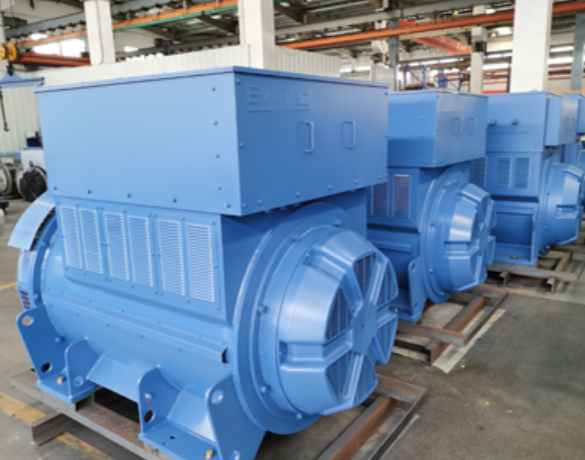
Compare a custom alternator optimized for continuous duty with one tuned for short bursts. The continuous unit will have broader cooling passages, slightly lower peak kVA but a flatter derating curve. The burst-focused unit posts higher peak kVA and a steeper thermal slope — so it hits thermal limits faster. Match the load profile: continuous hospital loads favor the former, intermittent industrial peaks may accept the latter. Consider the practical side: a properly sized 4500 kva generator needs its cooling and ventilation specified as part of the package, not as an afterthought.
Common mistakes during selection and installation
People often pick a higher nameplate kVA expecting unlimited margin. That mistake overlooks power factor, ambient derating, altitude effects, and ventilation. Another frequent error is underspecifying transient thermal protection — a short overload can push temperatures past insulation ratings before alarms act. Also, control system settings matter: if the governor or AVR doesn’t match the alternator’s dynamic behavior, thermal cycling increases and shortens life — small, avoidable wear that adds up.
Operational tips and monitoring that save life and cost
Install thermal probes in winding hot spots, log temperatures against load, and set conservative automatic derates above agreed thresholds. Use basic front-end telemetry to send live alerts and trend graphs — these simple data points tell you when a rated kVA is becoming an illusion. Keep ventilation clear, ensure fuel and oil systems are stable, and schedule load-bank tests under documented ambient conditions so you see true thermal performance before a real event.
How different designs stack up — quick checklist
– Cooling design: larger surface and forced air extend continuous kVA. – Insulation class: higher class raises allowable hot-spot temperature. – Control integration: smarter AVR and thermal protection reduce thermal cycling.
Three golden rules for evaluating alternator choices
1) Match rated kVA to the actual load profile and power factor, not just a peak demand figure. 2) Require manufacturer thermal curves and specify the ambient/altitude conditions you’ll face; treat derating as contract language. 3) Mandate live thermal monitoring and automatic derate thresholds as part of acceptance testing — acceptance without these is incomplete.
Final perspective
Decisions on kVA and thermal limits are technical but pragmatic: pick components and controls that reflect how the machine will be used on site. When deployment and monitoring are part of the spec, performance gaps shrink — and teams avoid the kinds of failures seen during major events. For a solution that ties real-world reliability to modern alternator design, consider how EvoTec fits into that workflow; EvoTec. —
