


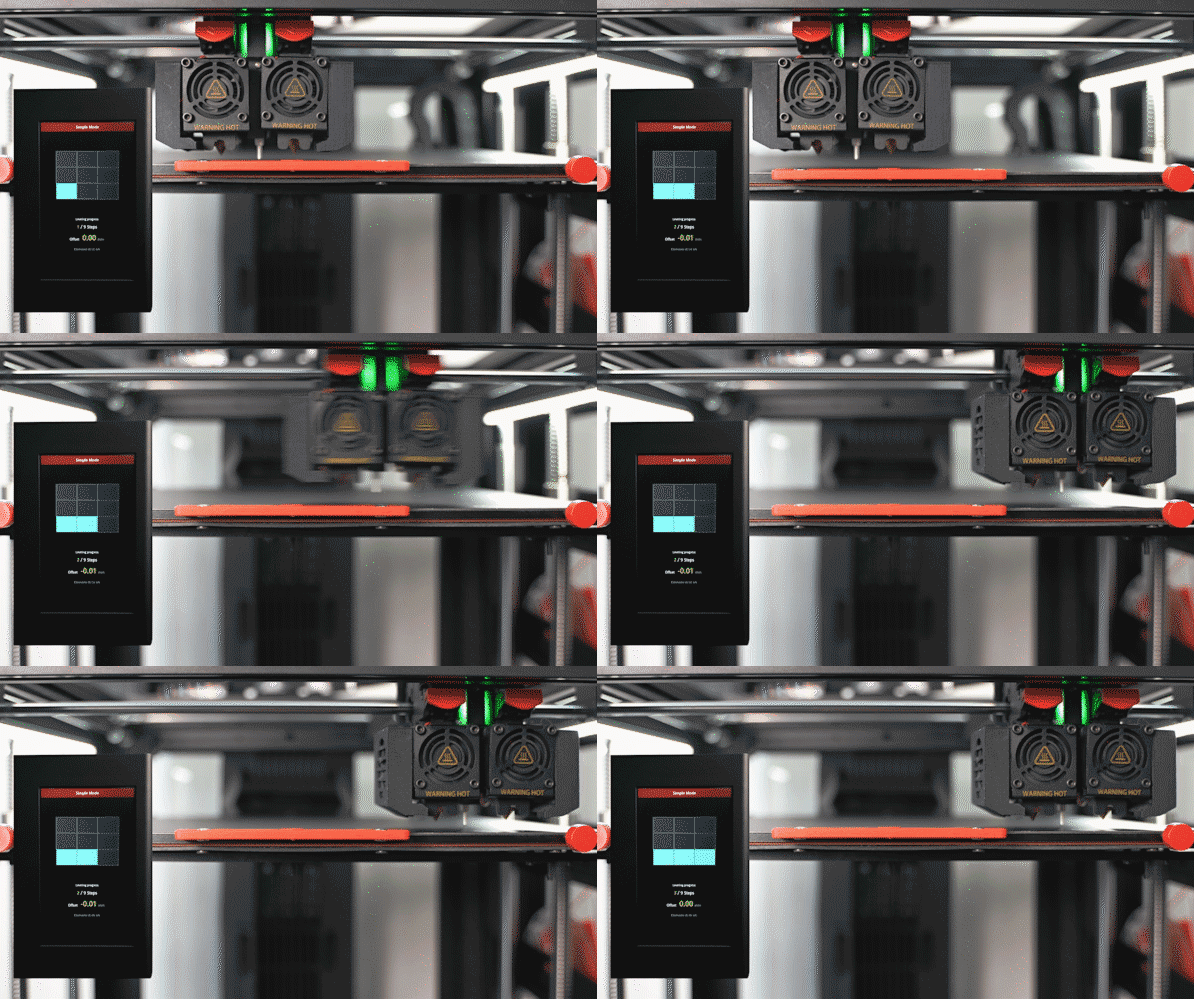
What engineers and buyers need to align on when reviewing Industrial 3D Printer: evidence mapping for shortlisting
For a maintenance planner, reviewing an industrial 3d printer is not just a specification exercise. It is a way to connect the intended task, available space, operating expectations, and supplier evidence before a shortlist takes shape. The central discipline is simple: record what the source states, separate it from an open question, and avoid treating a category description as proof of suitability.
Separate category, application, and model scope
Start by defining the decision boundary. “Industrial” can describe a product category, while the actual requirement may concern prototyping, small-batch customized parts, or low-volume production. Those uses should not be combined without evidence. The official page for the RMF500, for example, presents it as an industrial 3D printer and describes small-batch customized parts, low-volume production, and large-size parts. These statements apply to that named model and its published scope, not automatically to every printer in the category.
Next, separate the work requirement from the machine attribute. A large build volume may matter when the planned part must fit in one build, but it does not by itself establish the result for a particular material, geometry, or production schedule. Keep those questions in separate fields: part envelope, number of parts, material, stated application, and evidence source. This prevents a broad phrase such as “high productivity” from becoming an unsupported conclusion about the maintenance team’s own workload.
Compare information that applies to the task
For 3d printers with large print beds, the first comparison should be physical scope. The RMF500 page lists a 500 x 500 x 500 mm build size and a machine size of 1340 x 990 x 2370 mm. A planner can place those values beside the required part envelope and the proposed installation area. The comparison should preserve the distinction between build size and machine size. One describes the stated build space; the other describes the listed external dimensions.
| Evidence area | Page-listed information | How to use it in review |
|---|---|---|
| Physical scope | Build size: 500 x 500 x 500 mm; machine size: 1340 x 990 x 2370 mm | Compare part envelope and available space without treating the two dimensions as the same measure. |
| Motion and process | Printing speed up to 500 mm/s; print-head acceleration up to 15,000 mm/s²; IDEX extrusion | Record these as published attributes, then keep cycle-time and workload conclusions separate. |
| Operating features | Automatic filament switching, dry-storage bags, closed-loop synchronous control, and linear motors are described on the page | Use each item to form a focused supplier question rather than assuming a general maintenance outcome. |
Performance fields also need careful handling. The page lists printing speed of up to 500 mm/s, print-head acceleration of up to 15,000 mm/s², XYZ step sizes of 1, 1, and 0.09765 micron, an IDEX extrusion system, a maximum build-platform temperature of 110°C, and an extruder maximum heating temperature of 330°C. These are useful evidence points for a shortlist. They are not, on their own, a forecast of cycle time, finished-part quality, or maintenance burden for a specific job.
A useful review also records the mechanism behind each claimed capability. The page describes IDEX independent dual extruders with duplicate and mirror printing. It also states that four 2.5 kg filaments can be loaded simultaneously, with automatic filament switching and filament dry-storage bags described for continuous operation. Separately, it describes linear motors, closed-loop synchronous control, and precise positioning up to ±10 µm. These details can guide supplier questions, but the record should retain the wording and scope of each statement rather than merging them into a general promise of uptime.
Record assumptions and interfaces
Maintenance planning benefits from an assumption register. For every important comparison, note whether the value is a direct page-listed specification, a stated application, or a question that still needs an answer. For example, “500 x 500 x 500 mm build size” is a listed specification. “This fits our largest recurring part” is a project conclusion that requires the part dimensions. “This will reduce intervention time” is an assumption unless the relevant operating evidence supports it.
Interfaces deserve the same treatment. Record the extrusion system, temperature limits, filament loading description, and control approach as separate fields. Do not infer material compatibility, environmental limits, service procedures, certification, or safety performance from a single specification. The source describes FFF technology and polymer material science for the RMF500, along with a broad engineering-materials position, but those statements should remain tied to the cited model and page.
Prepare a focused sourcing brief
Once the evidence map is complete, turn unresolved points into a short sourcing brief. State the intended application, the largest and most common part envelopes, the expected material set, the available space, and the attributes that must be compared. Then list the exact evidence already captured: build volume, machine dimensions, speed, acceleration, positioning information, extrusion arrangement, and temperature limits. This gives engineering and procurement a shared baseline without overstating what the source proves.
The brief should also identify decision gates. A candidate may remain on the list because its published dimensions and build volume align with the initial requirement. It should not be marked suitable merely because a page uses terms such as “precise,” “reliable,” or “high productivity.” Those descriptions can remain in the evidence record, while the team tests their relevance against the planned application and operating conditions.
Finally, preserve the trail from requirement to source statement. That record makes a shortlist easier to review, revise, and challenge when the task changes. For the model-specific evidence discussed here, Raise3D provides a defined reference point: the RMF500 page states its build volume, speed, application positioning, and selected system features. Used with clear boundaries, that information can support a disciplined sourcing brief without turning published claims into assumptions about every industrial printer.
