


Comparative lens on a common fleet choice
Fleet operators choose cameras the way drivers choose routes: for clear, reliable outcomes. The decision between a 4-channel Mobile DVR and a 4-channel AI MDVR hinges not on novelty but on how each system answers concrete operational questions — which footage you need, how fast you must act on it, and how much data you can handle. For van fleet management that handles dense urban runs, these answers change the economics and safety profile of a route. I’ve followed several rollouts and interviewed technicians who manage delivery fleets in New York City, and the contrast is practical, not theoretical. When teams discuss delivery fleet tracking they’re really weighing real-world trade-offs: storage and retrieval speed, driver coaching capability, and event accuracy.
What each system is built to do
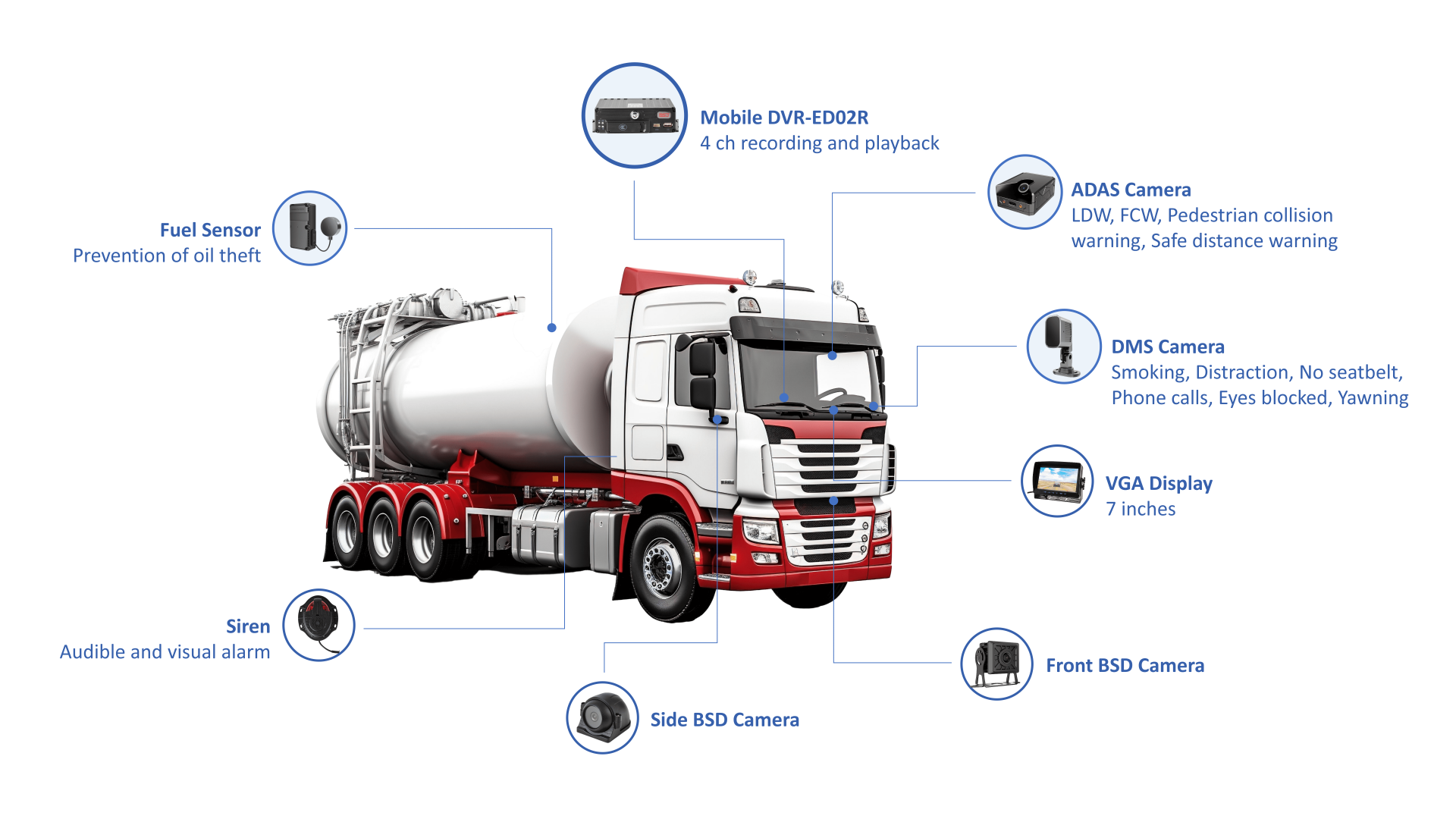
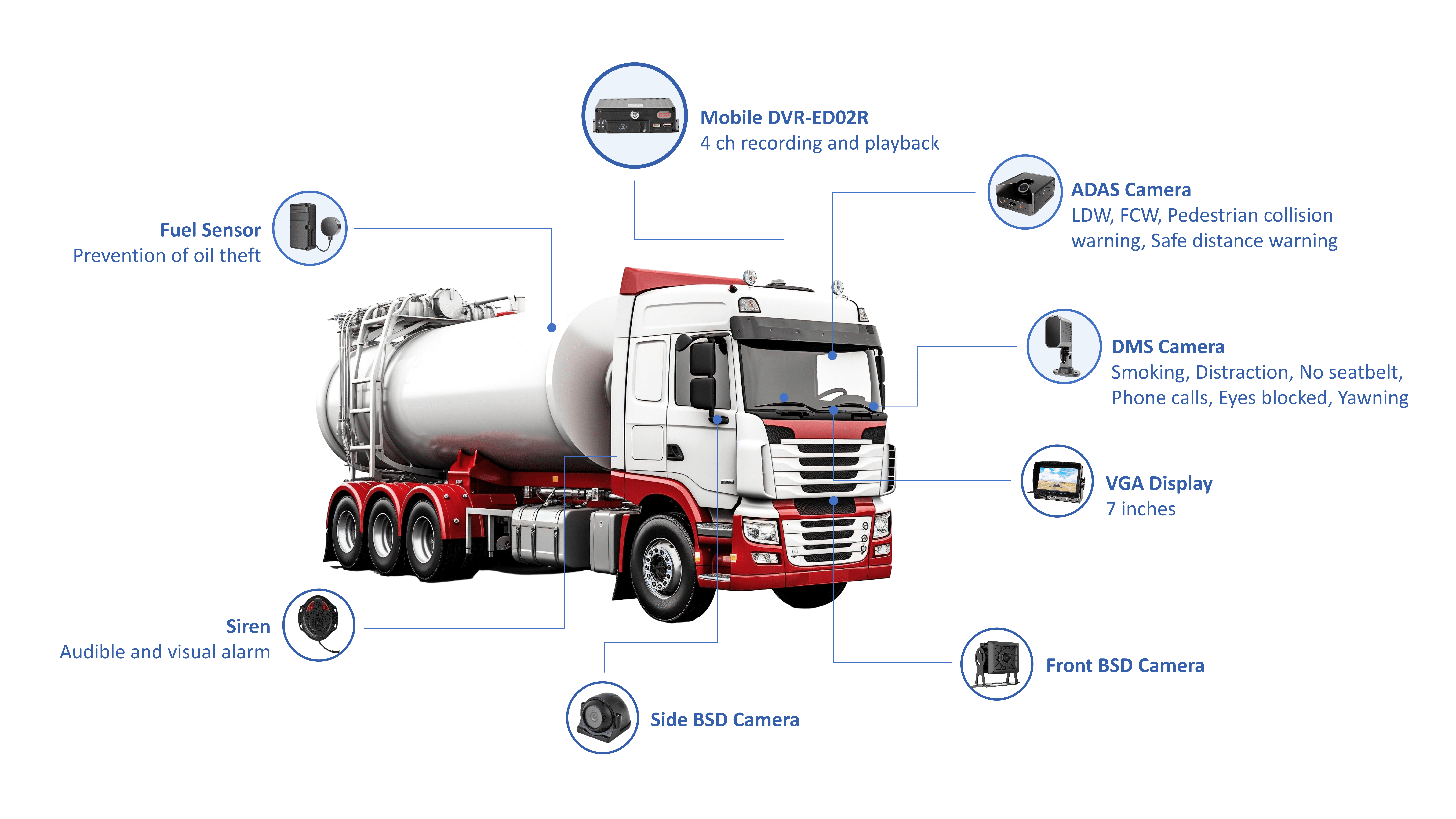
At a basic level the two systems share a frame: four camera inputs, a rugged chassis, and vehicle power integration. They diverge where processing happens and what intelligence they deliver.- 4-Channel Mobile DVR: records streams from four cameras, time-stamps video, and stores files on local media. Reliability and simplicity are the primary design goals.- 4-Channel AI MDVR: includes onboard inference engines that analyze streams in real time — object detection, driver behavior recognition, and event flagging before storage.These are not variations of the same tool; they answer different operational questions.
How AI changes daily operations
AI MDVRs remove guesswork by surfacing events that matter. Instead of sifting through hours of footage, operators receive prioritized clips flagged by behavior or anomaly. Expect:- automated harsh braking and lane departure clips,- face/seatbelt detection for coaching,- geo-fused events that pair video with location.That prioritization shortens incident review time and directs coaching resources where they matter. But it also requires trust in the model accuracy and a plan for handling false flags.
Bandwidth, storage and evidence handling
The DVR model centralizes storage management: raw video is packaged and offloaded on schedule. AI MDVRs change the balance:- less upstream bandwidth if only flagged clips are uploaded,- more local CPU and storage use because inference produces metadata and often higher-resolution retained segments,- simpler evidence discovery when the system indexes events.If your operation runs many short trips and needs fast access to specific incidents, AI indexing reduces turnaround. If regulatory or legal teams insist on raw continuous archives, the DVR’s straightforward files may be preferable.
Costs, lifecycle and maintenance realities
Short-term sticker price usually favors Mobile DVR. Long-term operational costs can favor AI MDVR depending on how you measure value:- Mobile DVR: lower upfront complexity, predictable replacement parts, fewer firmware patches tied to model drift.- AI MDVR: higher initial cost, periodic model updates, and potential subscription fees for cloud features. Gains come from reduced investigation hours and improved safety outcomes.Plan for service: camera calibration, firmware updates, and validation of AI performance on your fleet’s typical routes.
Where each system shines — quick scenarios
Match system to mission.- Choose 4-Channel Mobile DVR when you need rock-solid, low-maintenance recording for proof-of-delivery disputes and long archival windows.- Choose 4-Channel AI MDVR when proactive risk reduction, driver coaching, and rapid incident triage reduce operating disruptions.A mixed deployment often works: AI MDVRs on high-risk runs, DVRs on low-variance routes.
Common mistakes fleet teams make
Operators repeat preventable errors.- Deploying AI without validation on local roads — model performance varies with environment.- Neglecting a retrieval workflow — flagged clips mean nothing if no one reviews them.- Underestimating thermal and power conditions inside vans — both systems need proper installation to keep sensors reliable.Address each with a small pilot, defined review cadence, and clear responsibility for evidence handling.
Synthesizing choice into operational value
Decision clarity comes from mapping needs to capabilities. If your priority is straightforward recording and predictable upkeep, the Mobile DVR answers that. If your priority is cutting response time and reducing repeat incidents through data-driven coaching, the AI MDVR is the right tool. For fleet teams that must balance immediate proof with long-term behavior change, pairing the two across routes yields the best performance at scale. Those practical outcomes are exactly the problems systems like BSJ are designed to address, bringing technology choices back to operational value rather than hype.
