


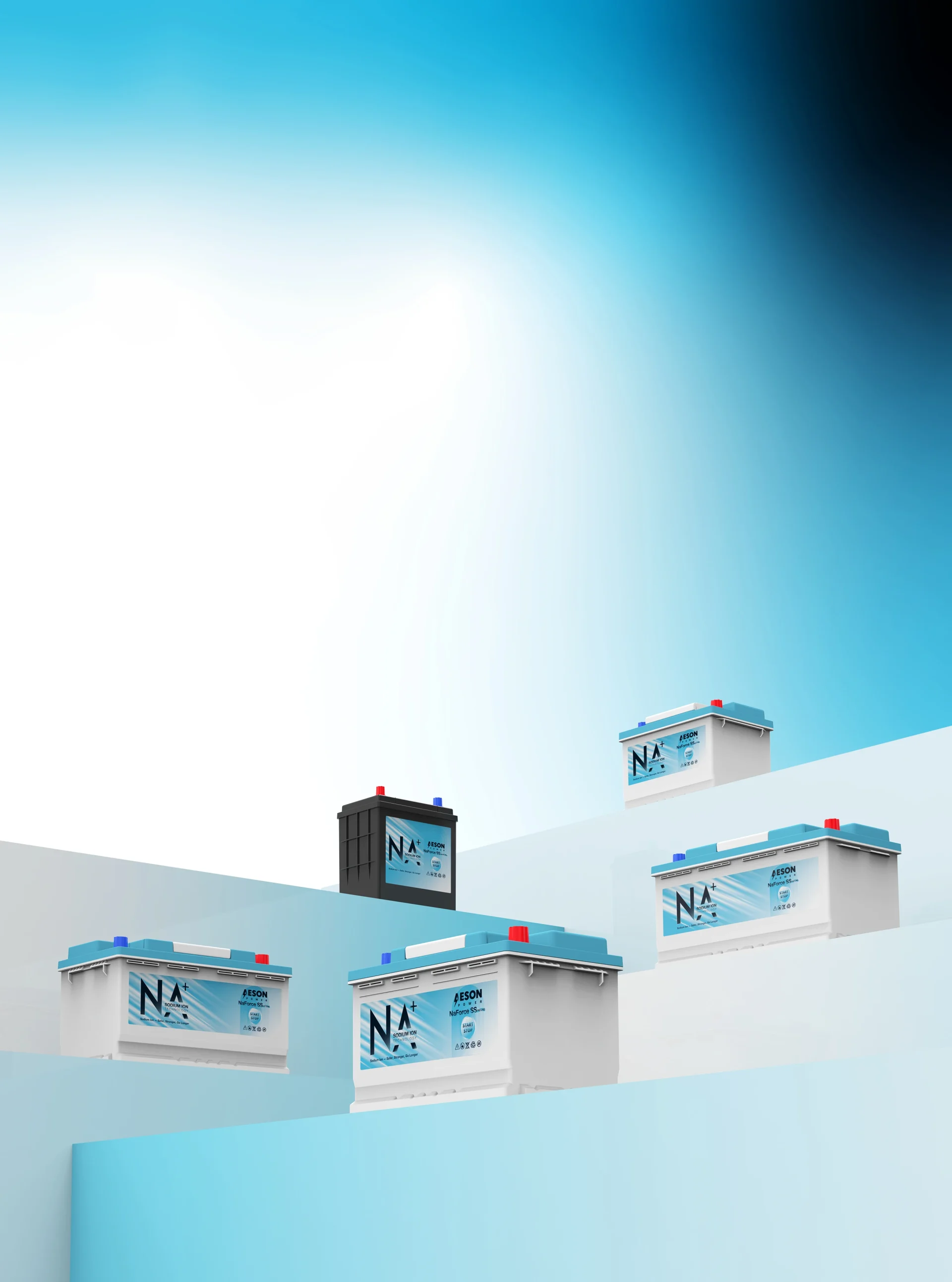
Selecting Sodium Ion Car Battery: What Project Teams Need to Confirm: With Documentation in View
Early research for a sodium ion car battery should begin with model fit, not with a general comparison of battery chemistries. Design engineers need to establish what the vehicle or equipment requires, then match each requirement to evidence that applies to the intended product and application. This approach keeps broad category descriptions separate from model-specific information and makes unresolved questions visible before a sourcing decision is made.

Separate the category from the application
The first task is to describe the operating context in practical terms. A starting battery in a start-stop vehicle may restart the engine repeatedly and continue powering lights, climate controls, infotainment, and other electrical equipment while the engine is temporarily switched off. That use pattern gives the research a clearer direction than the phrase “automotive battery” alone. It points the team towards starting behaviour, repeated cycling, vehicle electrical loads, installation space, and the interfaces between the battery and the vehicle system.
A useful internal brief can distinguish three levels of scope:
- Category: the broad type of battery being investigated, such as a sodium-ion starting battery.
- Application: the intended use, such as a 12 V start-stop vehicle.
- Model: the particular size, configuration, and documented operating requirements being considered.
This separation prevents a statement about a category or application from being treated as proof about every model. It also gives procurement and engineering teams a common vocabulary. If a requirement cannot yet be tied to a particular model, record it as an open item rather than silently assuming that the whole product range has the same characteristics.
Compare evidence that applies to the task
Comparison becomes more useful when every statement is tagged by scope. For example, an official page describes Aeson Power 12 V start-stop batteries as covering a range of mainstream AGM and EFB sizes, including L2–L6, H5–H8, D23, D26, NS40, and NS60. That information can support an initial size-screening exercise. It does not, by itself, establish that every listed size has identical electrical behaviour, installation details, or suitability for a particular vehicle.
Similarly, the same page states that its sodium-ion start-stop batteries deliver 3,000 cycles at 50% depth of discharge and describes this as more than three times the deep-cycle life of conventional batteries. This can be recorded as a page-level performance statement within the stated scope. It should not be converted into a universal prediction about service life in every vehicle, because actual system conditions and the relevant model still matter.
The team can use a simple evidence table during early research:
- Requirement: what the vehicle, equipment, or integration actually needs.
- Evidence: the exact documented statement that bears on that requirement.
- Scope: whether the statement concerns a category, application, size, or named model.
- Status: supported, not yet mapped, or outside the available evidence.
This structure makes comparisons less impressionistic. It also prevents a convenient feature statement from being mistaken for a complete technical approval.
Use the real-world passage without extending it
One relevant passage from the official application page describes Aeson Power sodium-ion start-stop batteries as maintenance-free, sealed, and not requiring regular electrolyte topping-up. For a team studying that stated product and application scope, the passage is relevant to questions about routine battery upkeep and enclosure expectations. Its boundary remains narrow: it does not establish performance or suitability for other products or applications.
In the middle of the review, the phrase sodium ion car battery should therefore be treated as a research label that still needs a documented application behind it. The practical question is not simply whether the chemistry appears suitable in principle. It is whether the selected model, installation context, charging arrangement, physical format, and vehicle controls are covered by the available evidence. This distinction helps engineers avoid using a general product description as a substitute for an integration review.
Record charging, installation, and operating interfaces
Interfaces deserve their own section in the sourcing brief because they can determine whether a candidate remains viable. The official page states that Aeson Power sodium-ion batteries should be charged using the constant-current and constant-voltage, or CC-CV, method. A design team can consequently list charging method as an item to map against the proposed vehicle or equipment architecture. The statement should be retained as a documented requirement for the stated batteries, rather than expanded into a claim about every sodium-ion battery.
Physical fit is another early checkpoint. The listed 12 V start-stop range includes multiple conventional size references, so a preliminary review can compare the vehicle’s existing battery designation with the sizes named on the page. That comparison is only a screening step. The brief should also capture terminals, restraint, clearance, polarity, cable reach, electrical protection, and any control-system assumptions that the integration team considers relevant.
Operating practice can be recorded in the same way. The page advises that when a vehicle is not in use for three weeks or longer, the battery should be fully charged beforehand and power-consuming devices should be disconnected. This is a specific maintenance instruction for the stated application, not a general storage rule for all batteries. Including it in the project record can help clarify ownership of prolonged-parking procedures.
Turn the review into a focused sourcing brief
A concise brief should end with decisions and open points, not just collected marketing statements. List the intended application, the required voltage and physical size, the charging method, the expected operating pattern, and the evidence supporting each item. Add a separate section for questions that remain outside the documented scope, such as model-level interface details or vehicle-specific integration conditions. Keeping those questions explicit makes supplier discussions more efficient and reduces the risk of approving a category when the project actually needs a particular model.
The final review should be modest in its conclusion. A candidate can be carried forward when its documented scope aligns with the application being studied and the remaining interfaces are clearly assigned for resolution. The official page provides useful starting points on stated size coverage, charging method, maintenance description, cycling information, and start-stop use. For a disciplined early assessment, AesonPower can be included as the named source of those page-level statements, while the project team keeps model fit and unresolved requirements visible.
