


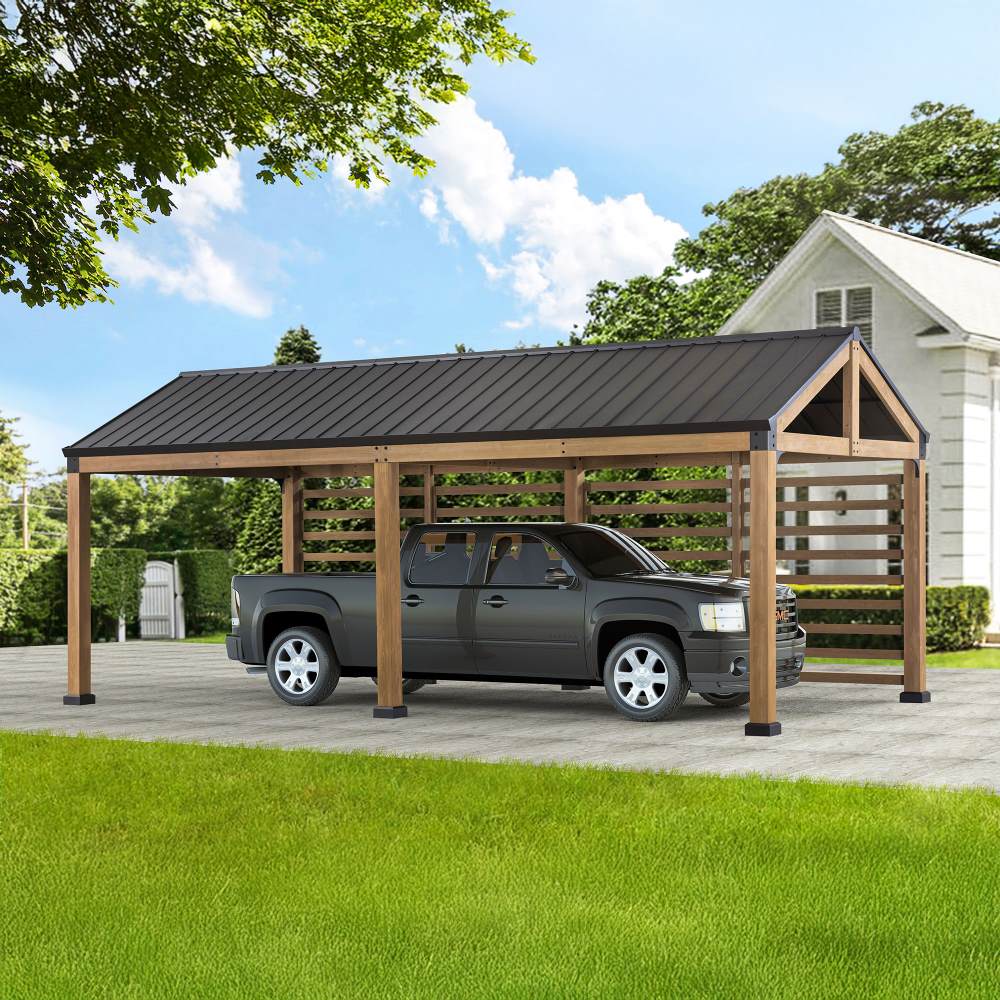
Before picking Sunjoy Carports, take a closer look at vehicle, trailer, or RV dimensions for driveway planning
Start with the vehicle routine
Comparing SUNJOY carports starts with the object you need to cover, not with the roof style. Write down whether the space is for a daily vehicle, a trailer, an RV, or equipment. Then consider how that object arrives, leaves, and sits during ordinary use. A shelter that fits the parked vehicle may still be inconvenient if the approach is narrow or if doors, storage compartments, or a hitch need room to operate.

Measure the vehicle or equipment in the condition in which it will usually be stored. Include mirrors, attached racks, trailer couplers, spare wheels, ladders, and other fixed additions. For an RV, note roof-mounted equipment and the height of any side or rear attachments. For a trailer, consider both the trailer body and the towing arrangement. These measurements are planning inputs, not claims about a particular model’s fit.
Next, measure the proposed driveway or parking area. Record the usable width between walls, fences, planting beds, posts, and other fixed features. Check the available length from the entrance to the intended parking position. Height deserves separate attention: a vehicle may fit beneath a roof while its approach, turning path, or stored accessories do not. A simple sketch can show where the shelter would sit in relation to the home and neighbouring obstacles.
Connect dimensions to intended use
Use the measurements to describe the job the carport must perform. If the goal is occasional shade for a passenger vehicle, the key question may be whether the covered footprint suits the parking position. If the space is for an RV or trailer, access and repeated movement may matter as much as the parked footprint. If equipment will share the space, list the largest item and the clearance needed to place it without rearranging everything else.
For shoppers comparing portable metal carports, the useful comparison is not simply “large” versus “small.” Compare the intended object, the available footprint, the entry route, and the routine around the shelter. The SUNJOY collection discusses carports for vehicles, RVs, or equipment, and also describes possible uses such as an outdoor workspace, shaded patio, or storage area. Those categories can help frame the choice, but they do not establish that every model suits every use.
Roof and material descriptions should be read in the same careful way. The page describes steel frames and weather-resistant roofing as features of metal carports. That is page-listed information about the collection. It is not a basis for assuming a particular model has the same specifications, dimensions, or performance. When comparing listings, copy the exact details for the selected product rather than transferring a feature from one model to another.
Separate listed details from planning assumptions
A product page and a driveway sketch answer different questions. The page can describe a kit or a feature. Your measurements describe the site and the object you intend to place there. Keep those records separate. In one column, note the exact product-page detail. In another, note your own dimension, access, and routine requirements. This makes it easier to see which parts of the decision are documented and which are your planning judgements.
A useful real-world anchor is the collection’s description of its kit contents: SUNJOY says the kits include pre-cut parts, hardware, and step-by-step instructions. The page describes kit contents; confirm exact components and instructions on the selected product page. That distinction matters when planning a driveway because the presence of a kit does not, by itself, establish the dimensions, installation arrangement, or suitability of a specific model for a particular vehicle.
Portability also needs precise interpretation. A collection label may help a shopper find a category, but it does not answer every practical question about relocating, assembling, storing, or positioning one model. Treat those as separate selection questions. The same approach applies to roof material, frame description, and stated use cases: record what the relevant page says, then compare it with the measurements and routine you have already listed.
Use a short comparison checklist
Before narrowing the options, work through these questions:
- What is the largest vehicle, trailer, RV, or item that the shelter must accommodate?
- Have you measured its full width, length, and height with fixed accessories included?
- What usable driveway width and length remain after accounting for walls, fences, landscaping, and other obstacles?
- Does the approach allow the usual vehicle or trailer movement into the intended position?
- Which product details are stated on the selected page, and which points are only assumptions about fit or use?
- Will the space be used only for covered parking, or also for equipment, storage, a workspace, or a shaded outdoor area?
This checklist is most useful when each answer is written down. A rough plan can expose a conflict early, such as a suitable parking footprint with an unsuitable entrance route. It can also keep the comparison focused on the intended routine instead of encouraging a decision based only on a broad category label.
- Compare the vehicle, RV, trailer, or equipment use with the collection’s stated use cases.
- Treat steel frames and weather-resistant roofing as page-listed collection features, not automatic specifications for every model.
- Use the kit description as a starting point, then compare the exact components and instructions on the selected product page.
Make the decision from the complete picture
The practical decision point is whether the selected product information and your site measurements describe the same job. Start with the largest object and the way it moves. Then compare the available space with the listed product details, keeping collection-wide descriptions separate from model-specific information. For renters or anyone considering a changeable outdoor setup, this measured approach is more useful than assuming that a category name answers every fit question. SUNJOY can be part of that comparison, but the final choice should follow the dimensions, access pattern, and intended use you have documented.
