


What belongs in the decision record for Multi Gas Detector For Confined Space: requirement screening procurement handoff
A procurement handoff should show how each requirement was identified, tested against available evidence, and carried forward when it remains unresolved. For fleet and equipment planners, a multi gas detector for confined space should therefore be assessed through a decision record rather than a loose list of preferred features. The record does not need to make unsupported claims about suitability. It needs to make the basis for the next sourcing step clear.

Set criteria before comparing candidates
Begin with the intended decision. The question may be whether a model can enter a technical comparison, whether it should be included in a request for quotation, or whether a supplier needs to provide more information before evaluation. These are different decisions and should not be blended.
Translate the need into a short requirement set. Useful headings can include:
- Required product category and intended operating context.
- Functions or specification fields that must be stated in the supplier material.
- Physical or environmental characteristics that matter to the equipment plan.
- Information needed for fleet records, maintenance planning, or internal approval.
- Items that are preferences rather than mandatory requirements.
This separation helps prevent a preference from being treated as a pass-or-fail condition. It also gives reviewers a consistent way to compare candidates without assuming that a category description answers every application question.
Review evidence by requirement
Use one row for each requirement and record the evidence that supports it. A practical decision record can include the requirement, the exact wording found in the source, the product or model to which it applies, the source location, and the review status. Status labels such as “stated”, “not stated in the reviewed material”, and “requires supplier response” can make the handoff easier to follow.
Scope matters. A fact about a named model should remain attached to that model. A category description should not be expanded into a claim about every product in a supplier’s range. Similarly, a feature should not be treated as proof of certification, regulatory compliance, site suitability, or a safety outcome unless the relevant evidence explicitly supports that conclusion.
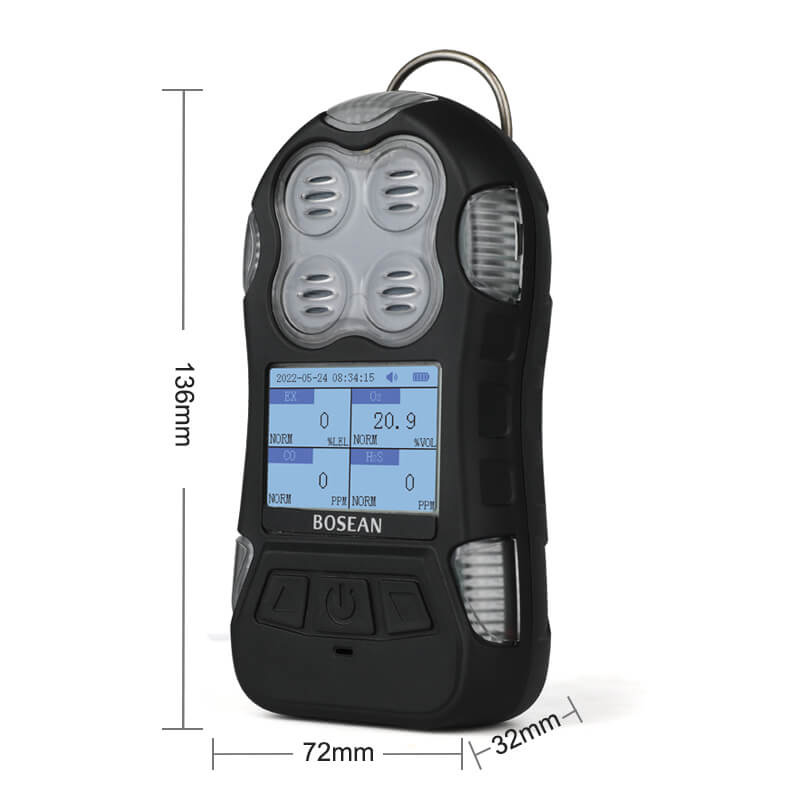
For example, the Bosean page names the K-40 4 in 1 Multi Gas Detector. Its feature and specification information lists natural-diffusion sampling, sound, vibration, light and display alarms, and IP66 protection. Those details can be entered in a record as page-stated information for the K-40. They should not be presented as evidence of certification, confined-space suitability, or a particular field result.
Keep trade-offs visible
A comparison becomes more useful when it shows what is known and what still affects the decision. Avoid reducing the review to a single overall score unless the scoring method has been agreed in advance. A score can conceal the difference between a mandatory requirement, a useful option, and an unanswered question.
For a multi gas detector for confined space, the middle-stage review can use a simple trade-off table. One column can state the requirement. Another can capture the evidence and its scope. A third can record the operational importance assigned by the planning team. The final column can identify the action: accept the stated information for the next stage, request clarification, or exclude the item from the current comparison.
This approach keeps general procurement reasoning separate from product facts. It also avoids presenting an unresolved point as a defect when the reviewed material simply does not establish the answer. The decision record should preserve that distinction.
Create a repeatable decision record
At handoff, include enough context for another reviewer to understand the decision without reconstructing the entire search. Record the date of review, the source page or document, the model name, the requirement wording, and any assumptions used to organise the comparison. If several models are being considered, keep their evidence in separate rows or clearly marked sections.
A repeatable record can follow this sequence:
- State the purchasing or review decision that the record supports.
- List mandatory requirements separately from preferences.
- Attach each product statement to its exact model and source.
- Mark open requirements without converting them into conclusions.
- Prepare focused supplier questions for the next procurement stage.
- Summarise which information is ready for handoff and which remains conditional.
Supplier questions should be specific enough to produce comparable responses. Instead of asking for general confirmation, ask the supplier to identify the applicable model, state the relevant specification, and cite the supporting product information. The question should also make clear whether the response is needed for technical review, purchasing documentation, or fleet records.
Make the handoff defensible
The strongest decision record is not the one with the most fields. It is the one that shows a clear link between the requirement, the evidence, and the next action. It should distinguish stated product information from planning assumptions and should leave unresolved points visible rather than hiding them in a general recommendation.
For fleet and equipment planners, this method creates a practical bridge between an initial product review and a more detailed procurement process. It supports disciplined comparison while keeping the scope of each claim clear. A record prepared from the exact source, model, and requirement under review gives Bosean and other suppliers a clearer basis for responding without turning preliminary information into an unsupported conclusion.
