


Intro: Mise en place for Better Cells
Picture the line at shift change. Thermocouples are taped, the slurry is mixed, and the ovens hum like a busy kitchen. In the next bay, a pouch cell is waiting for its first charge. Last week’s run looked fine, yet today you see a 2% capacity drift and a thin heat map stripe across the tabs—same recipe, different taste. What changed, and why now? Industry data shows that a 1°C gradient during formation can raise internal resistance several percent, and a 0.2 mm variance in stack pressure can skew wetting time by minutes. That’s enough to spoil the SEI “crust.” As chefs do, we ask: was it the heat, the timing, or the plating (packaging) that made the dish fall flat? Let’s lay out the prep, then walk the cook line—step by step—to see where flavor and yield split.

Tradition Meets Friction: Where Old Fixes Fall Short
Classic playbooks say: keep the formation curve fixed, hold the temperature steady, and the chemistry will settle. Yet the modern lithium ion pouch cell is more sensitive than that. Electrolyte wetting kinetics shift with foil roughness and calendaring pressure. A heater setpoint tells only half the story; heat flux across the jellyroll edges drifts near current collectors, and that changes local SEI growth. Look, it’s simpler than you think—and trickier too. Batch-to-batch carbon porosity nudges impedance; tiny misalignments in tab welding alter current density. The result: inconsistent first-cycle efficiency, hidden gas pockets, and edge-case failures that pass end-of-line but stumble in the field. Old fixes apply uniformity where the problem is spatial.
There’s also data blindness. Many lines sample a few cells and extrapolate the lot. Without inline electrochemical impedance scans or edge computing nodes at each bay, you miss the micro-shifts that matter. Power converters regulate current well, but if their loop response lags during pulse shaping, you seed defects you will only taste later. And when technicians “set it and forget it,” a small room draft or a damp day can tilt the curve—funny how that works, right? The flaw isn’t effort. It’s that static recipes don’t account for dynamic materials and microthermal gradients.
Why do “set-and-forget” recipes keep failing?
Next Course: Principles That Make the Future Cook
So what would a better kitchen look like? Start with adaptive formation—new technology principles over muscle memory. Instead of a single curve, use feedback-driven steps that watch real-time impedance and surface temperature delta across tabs. When a zone runs hot, the system trims current locally or adds a micro-soak. The same logic applies to gas management; sense pouch dome height and adjust stack pressure to keep electrolyte wetting uniform. In practice, a modern line treats each lithium ion pouch cell like a table for one, not a banquet tray. That means more sensors, smarter controllers, and analytics close to the process. Even a small move—like synchronizing cooling profiles with tab geometry—cuts variance in first-cycle coulombic efficiency. Semi-formal note: small loops beat big corrections.
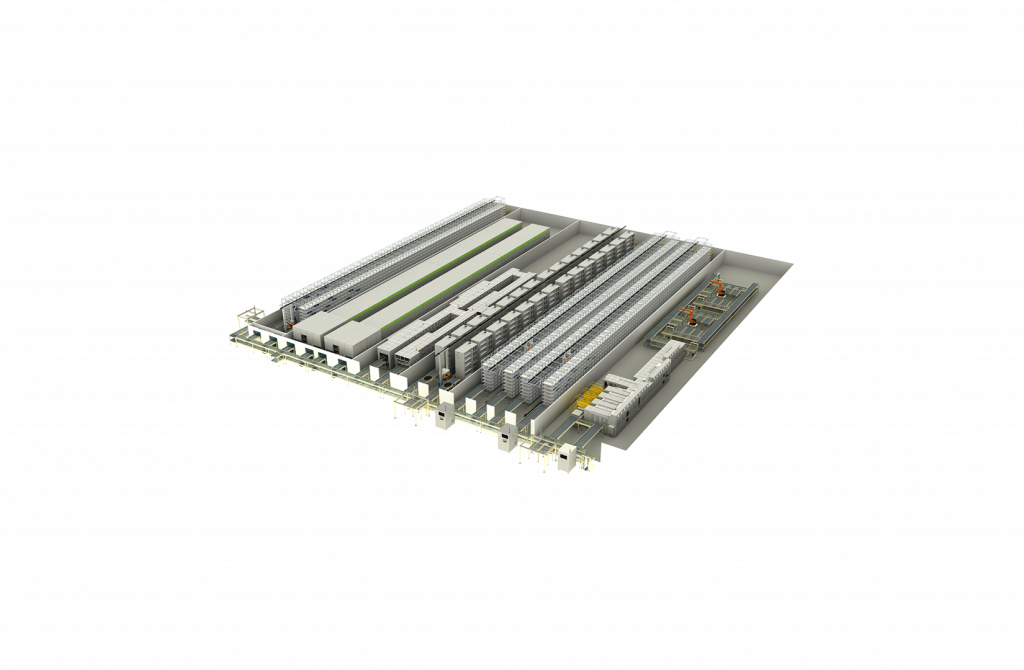
Comparatively, the shift is clear. Traditional lines push uniform heat and current and hope distribution follows. Adaptive lines map the field—tab to tab, edge to core—and steer it. They pair rapid thermal imaging with impedance checkpoints, then feed those signals to local controllers. Result: tighter SEI formation, fewer micro-voids, and cleaner gas release pre-seal. The takeaway from above sections stands: variability hides in space and time; older methods blur both. To choose well, weigh three metrics before buying or tuning a solution: 1) Spatial control: Can you modulate current and temperature by zone at sub-cell scale? 2) Sensing depth: Do you capture impedance, dome height, and heat flux per stage, not just per batch? 3) Response speed: Will your power converters and logic close the loop within the thermal time constant? Get these right and you stabilize yield, shorten aging, and protect runtime without overcooking the cell. For context and deeper tooling know-how, see LEAD.
