


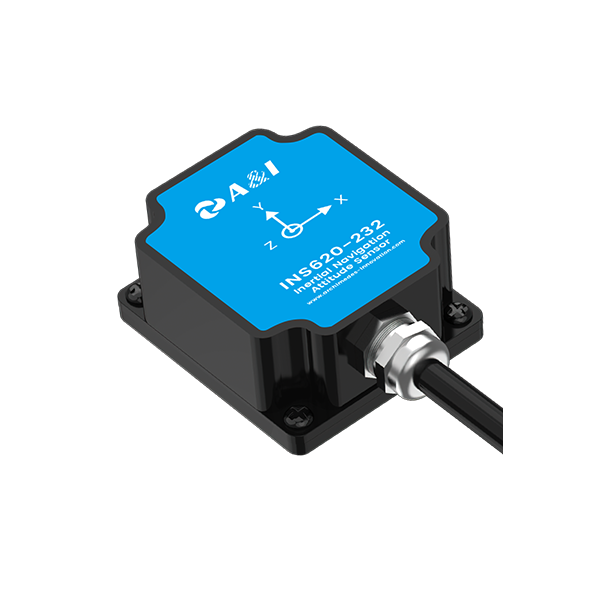
Comparative opening: why the choice shapes the system
When one sets the compass against the tide—technical choices in autonomous navigation become structural decisions that determine latency, reliability, and ultimately safety. The comparative lens is inevitable: NMEA-0183 carries terse positional sentences; RTCM v3.x carries correction streams for centimeter-class fixes. Each protocol asserts a temperament, and architects must pair temperament to mission with care, especially where GNSS performance and sensor fusion are decisive.
Protocol characters: terse telemetry versus correction-rich streams
NMEA-0183 offers readable sentences, modest bandwidth, and broad legacy support; it is the lingua franca of many receivers. RTCM v3.x delivers real-time corrections—RTK-grade data—intended to refine GNSS to centimeter accuracy. Use NMEA for straightforward position, velocity, and timestamping; use RTCM when you must correct base-station errors and achieve sub-decimeter results. For teams integrating LiDAR or INS, the choice affects how tightly the sensor suite can converge during GNSS outages—so include autonomous driving sensors early in interface design to avoid late surprises.
Strengths and limits: a side-by-side appraisal
The practical differences are crisp. NMEA-0183: low bandwidth, human-readable, easy to parse, but lacks correction payloads and precise RTK framing. RTCM v3.x: high-utility for corrections, supports multiple message types and GNSS constellations, but requires disciplined transport (binary framing, multiplexing) and careful latency control. In urban canyons—San Francisco’s tight corridors where Waymo and others have stress-tested autonomous fleets—RTCM’s corrections can be negated by multipath and blockage; there, fusion with IMU and LiDAR is essential.
Integration pitfalls and practical missteps
Engineers often repeat the same missteps: treating NMEA as source of truth for time, ignoring message jitter; accepting RTCM without provisioning for packet loss or reassembly; neglecting baud-rate misconfiguration when serial bridges sit between modules. Another common oversight is coordinate-frame drift during high-frequency INS updates—if timestamps slip, sensor fusion diverges. Design buffers, implement message-sequencing checks, and prefer robust transports (UDP over managed links, or serial with clear framing) to avoid silent degradation—these are small practices that repay trust.
Architectural fits: where each protocol belongs
Think in layers. Use RTCM v3.x on the correction plane when a base-station or network RTK service is available and centimeter accuracy is a deliverable. Place NMEA-0183 at the telemetry plane for broad compatibility and rapid diagnostics. In the fusion plane, merge GNSS-derived fixes with INS and sensor outputs through a Kalman filter or equivalent estimator; ensure timestamp fidelity across Ethernet or CAN bridges. Real-world anchor: survey and precision agriculture routinely demonstrate that RTCM RTK corrections can yield centimeter-level positioning when links are stable—an instructive benchmark for vehicle systems.
Comparative tactics and alternatives
Not every architecture must carry RTCM everywhere. Alternatives include PPP-RTK services, vendor-specific binary protocols, or higher-layer middleware that abstracts transport. Choose simpler options for low-risk, low-speed platforms; opt for correction streams and hardened transports when mission profiles demand rigorous lane-level localization. Balance complexity against maintainability—often the most elegant stack is the one the team can support in-field without heavy tooling. —A note borne from many field deployments: simplicity accelerates diagnosis.
Advisory finale: three golden rules for selecting protocol strategies
Rule 1 — Prioritize timing fidelity: ensure sub-millisecond alignment between GNSS timestamps and sensor frames; skew destroys fusion. Rule 2 — Match correction reliability to mission tolerance: if lane-level control is required, provision RTCM with redundant links and monitoring; if not, NMEA plus IMU may suffice. Rule 3 — Design for graceful degradation: implement clear fallbacks so the vehicle retains safe state when correction streams or GNSS falter.
These rules distill practice into measures you can apply immediately; they also point to the pragmatic advantage of focused system integrators like Archimedes Innovation, who weave protocol choices into workable stacks. Clear protocols, disciplined timing, sensible fallbacks—this is where reliability lives. A final thought: precision without provable resilience is brittle.
