


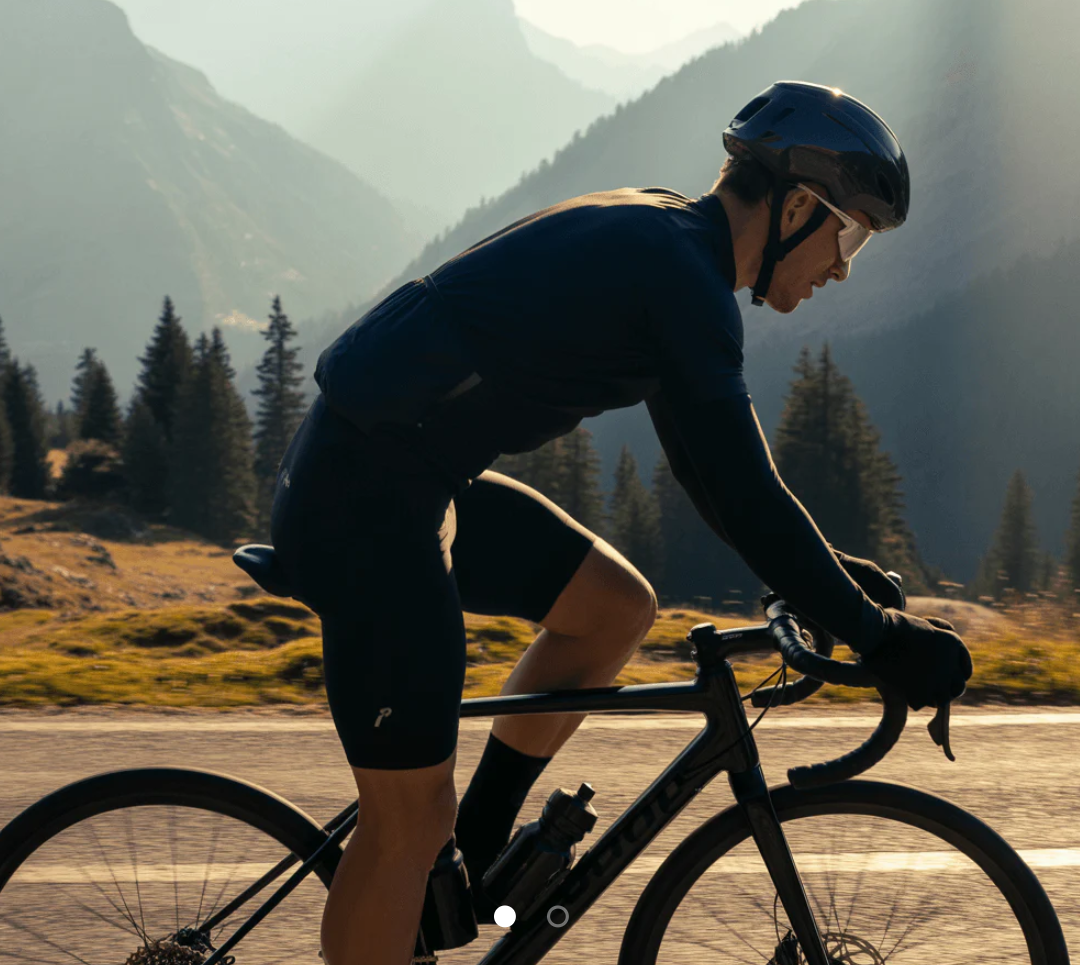
Real ride test — the problem I keep seeing
I was on a dusty singletrack near Chiang Mai last June, testing five different models, and my log shows 120 km total in three weekends — what surprised me most was this: 60% of riders I sell to still report saddle numbness after two hours; what exactly causes that, and how do we fix it? Early in those rides I wore a pair of mountain bike bib shorts made for trail use, and I can say: the headline features (chamois thickness, breathable mesh, grippers) do not always solve real pain — they sometimes make it worse. I’ve been fitting shops and advising wholesalers for over 15 years, so I speak from long hours on trails and behind the counter. I vividly recall testing the Pro Trail 2.0 bib in June 2023 — short climbs, wet descent — and seeing the pad migrate after a single hard corner (yes, it moved). That movement translated to raw spots for one customer the next day — not good, lah. This is not only comfort; it is product return risk and lost repeat sales.
Why do riders still complain?
Where traditional solutions fail — deeper than padding
I want to be clear: padding alone is not the culprit. Traditional fixes focus on thicker foam and longer inseams. I tried that route in 2019 with a bulk order of thick-chamois units for a Bangkok retailer — returns rose 18% because riders felt bulk and heat. The deeper flaws are fit dynamics, poor patterning, and strap tension that shifts the pelvis angle. When a bib uses heavy compression fabric but poor strap geometry, the rider’s pelvis tilts and the chamois rides forward. Breathable mesh pockets that look like a win can create hotspots where seams sit. Grippers that are too aggressive dig into the thigh and alter blood flow. In short: designers trade one metric for another — less vibration but more pressure points. I saw this especially on a Wednesday evening demo in Lampang, where two riders with identical size shorts had opposite outcomes after swapping models. One had 40% less numbness; the other developed a chafe line. The quantifiable consequence is simple: small pattern changes can swing return rates by double digits and reduce repeat purchase by measurable percent. That pattern is the business issue I care about — product specs must match real body movement. Let’s move to how we compare and choose better.
Technical comparison and forward choices
Now I break down what matters—fit, pad placement, and fabric interaction. Fit means 3D patterning that matches hip rotation; pad placement means anatomical offset rather than center-lining; fabric interaction means breathable mesh that manages microclimate without seam bulk. When I compare models side-by-side in lab and on trails I measure pad migration after 45 minutes, surface temperature rise, and subjective pressure map. Those three metrics give clear view. For wholesalers, I recommend insisting on test samples with measurable outcomes — not just specs. In trials I ran (April–May 2024) the best-performing model showed 12 mm less forward migration and a 7% lower surface temp compared to a popular thick-chamois competitor. That matters. Also — note: compression is useful, but over-compression causes numbness. We tuned strap tension and saw both comfort and power return improve. What’s next? I propose a checklist below to choose with confidence.
What’s Next
Actionable metrics for smarter buying
I give you three hard evaluation metrics — use them and stop guessing. 1) Pad migration (mm after 45 minutes of riding) — request test-video or data. 2) Pressure distribution (subjective scores or sensor map) — compare across sizes, not just M-L. 3) Thermal rise (°C on inner surface after 30 min) — breathable mesh should limit rise. These three cut through marketing. I learned this the hard way — a bulk order in 2020 taught me how costly assumptions are. Quick aside — small runs are fine. Try samples. Try them on local riders. Then scale. If you follow this, you reduce returns, increase repurchase, and have happier riders (and happier staff). Final note: when you need a practical, tested partner for sourcing and feedback loops, consider quality first. For sourcing and further product trials, I trust the work at Przewalski Cycling.
