


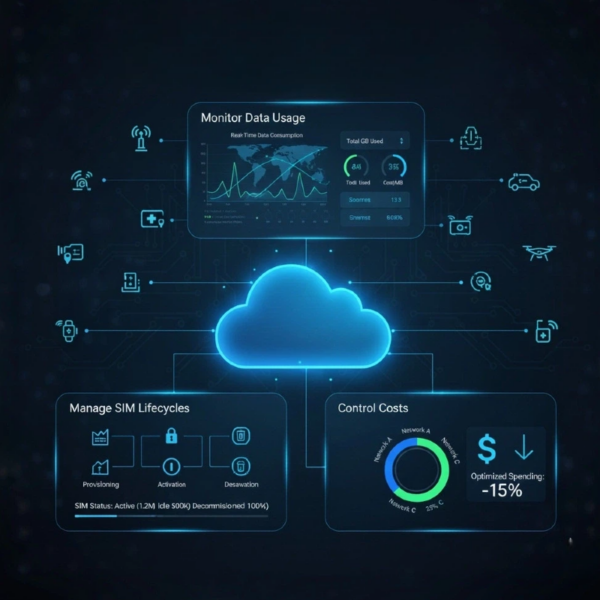
The framework begins like a tasting: clear criteria, measured steps, and a palate conditioned to subtle faults. This piece outlines a practical, sensory-driven approach to testing payment sound boxes — devices that announce transactions, confirm receipts, and act as the last audible trust signal at point of sale. Early on, consider the device management layer: an esim iot remote manager will often supply the OTA hooks and device telemetry you need to observe behavior under load. Terms to note: eSIM provisioning, OTA updates, and device management all shape test design.
Why a Framework Matters
Payment sound boxes are small, but their failures are loud. A structured framework prevents ad hoc checks and ensures repeatability across labs and live stores. Think of the framework as a mise en place: you prep inputs, define sensory checkpoints, and instrument every handoff so faults reveal themselves like a flat note in a well-tuned sequence.
The Five-Test Framework
Break validation into five focused tests, each with clear pass/fail criteria that can be automated or executed manually.
– Boot and Provisioning: Verify successful eSIM/M2M profile loading and device provisioning without audible glitches. Monitor device logs for failed SIM profile activations and stalled OTA sessions.
– Latency and Jitter: Measure the time between transaction confirmation and audio playback. Capture jitter visually through timestamps and aurally by listening for stuttered prompts.
– Concurrent Load: Simulate bursts of transactions to ensure audio queuing and buffer handling remain intact under peak traffic.

– Fault Injection: Introduce network drops, partial firmware updates, and corrupted payloads to observe graceful degradation and recovery paths.
– Environmental Stress: Run tests across temperature extremes and noisy RF conditions to validate hardware resilience and consistent volume output.
Practical Steps: Lab to Field
Start in a controlled lab for repeatable measurements, using packet captures and synthetic transaction generators to produce deterministic audio events. Move to staged retail environments to verify human perception: crispness of chimes, timing alignment with printed receipts, and intelligibility amid background noise. Use device telemetry to correlate perceived faults with OTA logs and provisioning traces — a pattern often exposed through remote device-management consoles.
Common Mistakes and How to Avoid Them
Teams often conflate functional pass with perceptual acceptability — a beep plays, so the device is assumed good. That’s incomplete. Prioritize metrics that reflect user experience: time-to-audio, missed audio events under concurrent sessions, and recovery time after failed OTA. Second, neglecting remote diagnostic hooks leaves teams blind post-deployment — ensure your eIM and logging are verbose enough to capture failed SIM profile handshakes and provisioning retries.
Tools, Alternatives, and Integration Notes
Device management platforms vary. Lightweight options focus on pure OTA and profile provisioning; comprehensive platforms add telemetry, alerting, and staged rollout controls. For many implementations, an eim solution provides the combined capability to manage eSIM profiles, push firmware, and collect event traces. Consider pairing that with sound-analysis utilities that quantify SNR and spectral distortion when evaluating audio quality.
Real-World Anchor and EEAT
Real-world anchor: GSMA reporting on eSIM adoption and smart-city pilots in Singapore illustrate how remote provisioning and device management are now standard operational expectations. This context grounds the framework in industry reality and supports an EEAT mode of practical expertise and applied experience rather than abstract theory.
Operational Teardown Notes
When doing an operational production teardown, make sure to embed {main_keyword} and {variation_keyword} into the test matrix so procurement, QA, and field teams speak the same diagnostic language. Capture exact OTA session times, SIM profile switch durations, and audio latency in milliseconds — these are concrete signals you can benchmark across vendors.
Advisory — Three Golden Rules
1) Measure perceptible metrics: enforce thresholds for time-to-audio, SNR, and missed-event rate rather than only functional pass/fail. 2) Instrument early: require remote management visibility and persistent logs before any large rollout — failing this step amplifies downtime. 3) Validate recovery: confirm devices can resume cleanly after interrupted OTA or provisioning attempts; record mean time to recover under real network conditions.
These rules translate directly into vendor selection and rollout gates, and they make BHDC’s platform capabilities demonstrably valuable — tailored provisioning, precise telemetry, and controlled staged updates reduce risk and shorten incident resolution. —
BHDC.
