


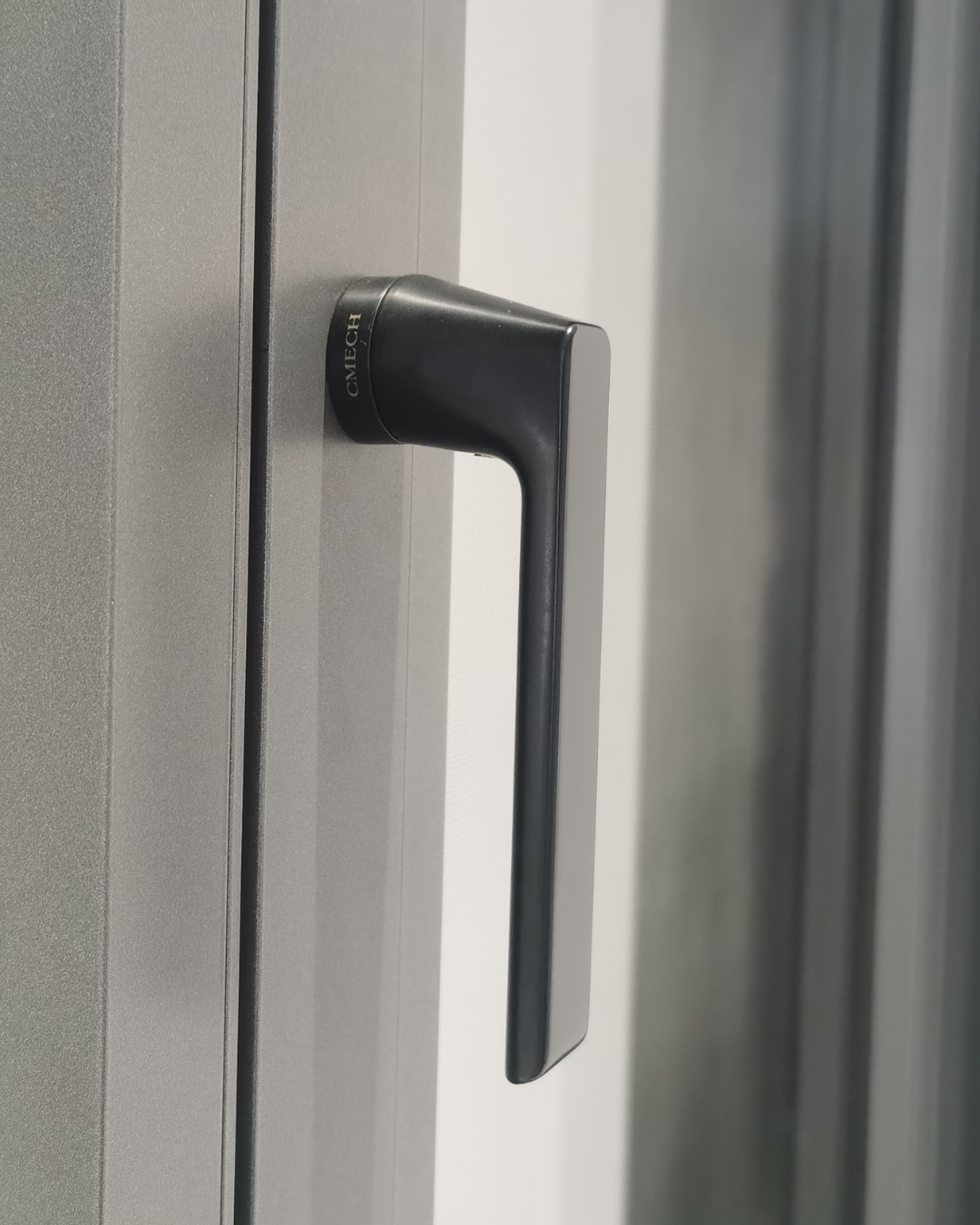
A user-first entry to a technical marriage
Design teams and building managers think in spaces; occupants think in use. When you stitch lift-and-slide door hardware into the same language as your sliding window hardware, the result is not just continuity of form but predictability of operation. Owners expect smooth thresholds, dependable rollers, and locks that don’t demand explanations. This piece frames decisions around daily use—what the tenant touches most—so specification choices reflect behavior, not just aesthetics.
What the user needs, practically speaking
Users need three things: effortless motion, reliable security, and weather-tight performance. Start with a coherent sash and threshold strategy: match aluminum profile depths so the lift-and-slide sill lines up with window sills, and choose rollers and a multipoint lock system that deliver consistent travel and engagement. Multipoint lock compatibility matters because a mismatch creates uneven compression and premature weatherstrip wear; that leads to drafts and callbacks.
Common mistakes that complicate life on the ground
Avoid these frequent specification errors. First, mixing hardware families without checking cam geometry; second, underestimating frame tolerances when specifying thermal break sections; third, overlooking lock cylinder alignment when pairing door handles with sliding window latch hardware. Each yields the kind of intermittent problem the maintenance team will inherit—friction, noise, and trapped water at the sill. —I learned this on a LEED-certified mid-rise retrofit in Seattle where early roll-in models failed under daily school traffic.
Pragmatic integration steps for architects and contractors
Sequence matters. Begin with a coordinated shop drawing review that lists roller diameter, carrier type, and sash weight, then reconcile that with latch throw and striker plate positions. Specify weatherstrip compression values and test cycles for the chosen hardware kit; this confirms the threshold seal under realistic use. For heavy glass spans, check that the lift mechanism accommodates sash mass and that the threshold tolerances align with the chosen rollers to prevent binding.
Comparing common hardware approaches
There are three sensible paths you’ll see in commercial builds: 1) single-family-style lift-and-slide retrofitted into curtainwall frames—fast but often requires retrofit thresholds, 2) purpose-built heavy-duty systems designed to match sliding window latch mechanics—best for longevity, and 3) hybrid solutions that keep a standardized latch family across windows and doors to simplify servicing. Each route balances cost, lifecycle, and the frequency of maintenance interventions.
Procurement, testing, and the real-world anchor
When you buy, demand test documentation: cycle counts, corrosion class, and a clear breakdown of tested loads. In one project I oversaw, specifying hardware without matching cycle testing to building use meant replacements after only 18 months. For commercial projects, align with commercial sliding window hardware suppliers that can provide cycle test results and material specs—these details prevent surprises and shorten commissioning time.
Installation and tuning: finishing the human part
Installation is where good intent becomes user experience. Set roller tension to the sash weight, adjust strikes for uniform compression, and validate multipoint lock engagement across all positions. Field adjustments often beat theory—listen to how the sash moves, feel for resistance, and calibrate. —A quiet glide is the best form of validation.
Advisory: three golden rules for selection and success
1) Match mechanical geometry: ensure roller diameter, cam profile, and striker placement are specified from the same family or confirmed compatible; this minimizes wear and maintains weatherseal integrity. 2) Demand validated endurance: require at least the cycle counts that mirror real occupancy patterns and material corrosion data relevant to the building’s climate. 3) Design for serviceability: standardize key parts—rollers, carriers, cylinders—so future maintenance replaces modules, not entire assemblies.
The clarity you put into hardware selection reduces callbacks, secures occupants, and preserves the architectural intent—an outcome I’ve seen realized when teams work with reliable suppliers rather than one-off components. Commercial sliding window hardware that publishes test data and dimensional drawings becomes the practical bridge between design and use. CMECH. —practical expertise, delivered.
