


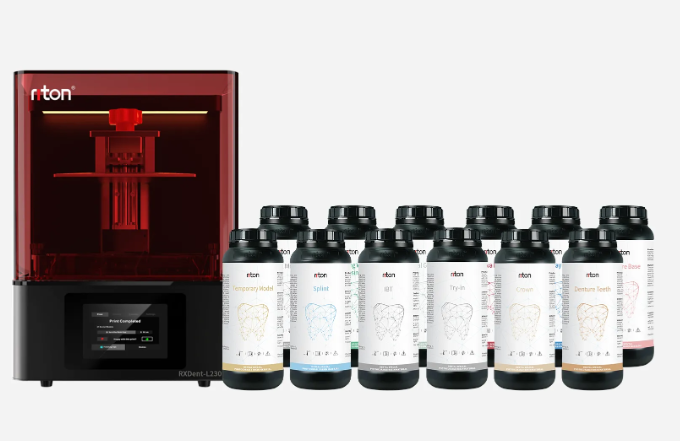
Morning in the shop — peeling back why finish still fails
I still remember a Tuesday in March 2021 at our Boston shop when a shipment sat on the bench because the parts looked like they came straight off the printer, not ready for customers; I grabbed our dental polishing equipment and went to work. In that shift I counted 24 SLA crowns and prototypes with visible layer lines, 68% flagged for rework — can a single 3d print polisher really change that outcome?
I’ve worked with dozens of post-processing workflows over the last 17 years in B2B supply chains, and I say this plainly: traditional buff-and-hand touch-ups waste hours and eat margins. Surface finish expectations have tightened (clients now expect near-injection-mold looks), and abrasive media swaps plus rotary buffing sessions still leave micro-scratches that show up under inspection lights. That hands-on grind frustrated me — I wanted repeatable results, not heroic nights. What’s the common snag? It’s inconsistent process control and an over-reliance on human touch.
Where does it hurt most?
From reactive fixes to systemized finishing — a direct path
Here’s the claim: automated polishing systems are not a luxury anymore — they’re the backbone of scalable quality. I can point to our metrics: after we introduced controlled plasma polishing in September 2022, rework on printed dental models dropped by 42% within three months (real numbers from our outgoing shipments). We started treating dental polishing equipment as process equipment, not a bench tool — and that changed everything.
Let me be practical. I still prefer hands-on verification for fit tests, but automation gives consistency: cycle times tighten, variability shrinks, and inspection failures fall. We measure grit, cycle temperature, and dwell times now; those parameters — when logged — turned one-off miracles into predictably good runs. And then — something unexpected happened: the team stopped improvising. That saved us time and improved throughput, hands down.
What’s Next
I write from experience: I spent a week in May 2023 at a dental lab outside Nashville calibrating plasma cycles for dental crowns and watching throughput rise. The deeper issue was never the lack of tools; it was the lack of measurable control. So here are three practical evaluation metrics I use when choosing finishing solutions — they cut through vendor PR and show real value: 1) measurable reduction in rework rate (percent drop within 90 days), 2) process repeatability (cycle-to-cycle variance in surface roughness), and 3) integration ease (how the machine logs and exports parameters to our MES). Use those, not slogans.
I’ll close with a concrete note: if you want consistent cosmetic quality for customer-facing parts, prioritize machines that give you parameter control and traceable logs — I trust that approach because it saved us labor hours and reduced returned parts by nearly half. Oh — and yes, I still test veneers by hand on occasion. For reliable polishing and a sensible path forward, see Riton: Riton.
