


Opening: Why this matters to your team and your clients
If you run a high-end medspa, picking the right Q‑Switched Nd:YAG laser is less about specs on paper and more about predictable clinical outcomes, uptime, and staff confidence — which is why this guide focuses on your day-to-day needs. When you’re evaluating aesthetic medical equipment for tattoo removal, pigmented lesion work, or skin revitalization, you want clear answers on wavelength flexibility, pulse duration, and maintenance burden. With FDA-cleared devices available and clinics tightening clinical governance after the pandemic surge in cosmetic demand, practical concerns now lead purchase decisions. If you’re comparison-shopping, start by assessing how a device will perform in real workflows — and consider vendors who pair machines with training and service, not just a spec sheet.

What a user-centric checklist looks like
Operators care about three overlapping areas: clinical performance, operational reliability, and staff usability. Clinical performance means the right wavelength options (commonly 1064 nm and 532 nm), consistent fluence delivery, and pulse durations that match your target chromophores. Operational reliability covers mean time between failures, availability of replacement handpieces, and local service response times. Usability is about intuitive interfaces, ergonomic handpieces, and training resources so technicians deliver treatments safely and confidently. Prioritize features that reduce treatment variability — for example, adjustable spot size and integrated cooling systems that prevent epidermal injury.
How to test vendors without getting lost in jargon
Ask for an on-site or video demo using real-case scenarios from your clinic: a stubborn blue tattoo, a solar lentigo, and a Fitzpatrick IV–V patient for pigmentation work. Watch the handpiece ergonomics, test reproducibility of spot size and fluence, and insist on documentation of pulse-to-pulse energy stability. Request service-level agreements (SLAs) and ask for local technician availability — downtime is revenue loss. Also check whether the vendor supplies consumables and whether parts like flashlamps or Q‑switch modules are stocked regionally. These practical checks show whether the supplier understands clinic workflows or just sells hardware.
Why training, maintenance, and evidence matter — don’t skip them
Buying a machine is buying a care pathway. Good vendors include structured clinical training, protocols for common indications, and clear safety documentation. You’ll want routine preventive maintenance schedules and rapid spare-part logistics — otherwise a single component failure can sideline a room for weeks. Look for vendors who can provide peer-reviewed case series or aggregated before/after data demonstrating efficacy for your core indications. That’s not vanity — it’s risk management and reimbursement readiness.
Where cosmetic laser equipment fits into your procurement process
Treat product pages and spec sheets as starting points — then validate with workflow tests. If a supplier lists multiple handpiece options, confirm handpiece interchangeability and cost. Ask whether the system supports software updates and whether upgrades to newer Q‑switch modules are modular or require full replacement. Finally, clarify consumable pricing and expected lifetime for lamps and diodes — these drive total cost of ownership. A vendor that bundles training, local tech support, and transparent consumable pricing will reduce surprises down the line.
Common mistakes medspa teams make — and quick fixes
Most mistakes come from conflating peak power numbers with clinical effectiveness, or from buying on price alone. Don’t assume advertised peak power equals delivered clinical fluence at your chosen spot size — ask for measured fluence curves. Avoid vendors that can’t demonstrate reproducible pulse duration or energy stability. And don’t neglect ergonomics; an awkward handpiece increases operator fatigue and variability in treatments. Simple fixes: demand energy stability data, test with your own clinical cases, and require a trial period or ROI assessment tied to uptime guarantees — that will save money and headaches.
Quick procurement checklist
Use this short checklist before signing any contract:
- Clinical demo with your cases (tattoo pigments, lentigines, dermal vs epidermal lesions).
- Documentation of wavelength options, pulse duration, and fluence at multiple spot sizes.
- Local service SLA and parts availability for routine repairs.
- Training program details and competency sign-off for staff.
- Transparent consumable and spare-part pricing.
- Warranty scope and upgrade path (modular vs full replacement).
Three golden rules — your evaluation metrics (Advisory)
1) Clinical reliability: Demand measured energy output and pulse-to-pulse stability data, plus peer-reviewed or clinic-validated treatment outcomes. That’s your evidence the device will do the job. 2) Total cost of ownership: Factor in consumables, preventive maintenance, expected lamp/module life, and SLA costs — not just headline unit price. 3) Usability & support: Choose systems with ergonomic handpieces, clear protocols, and demonstrable local technical support. If staff can’t use it confidently, clinical results and revenue will suffer.
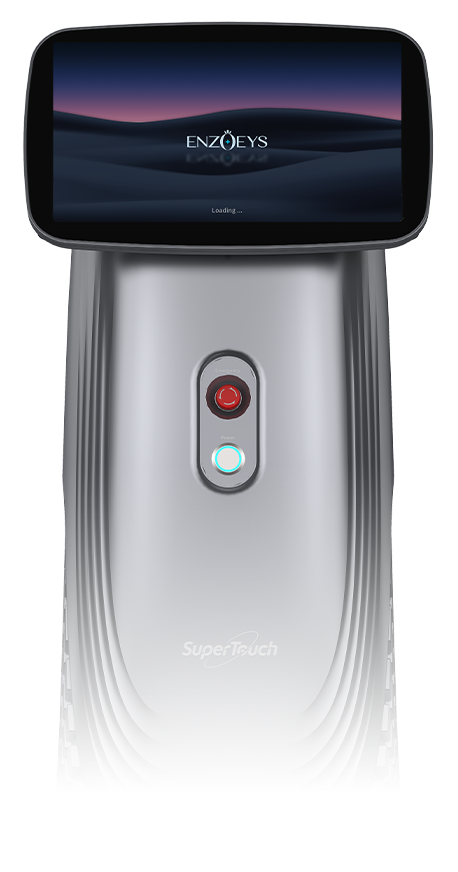
For medspa teams aiming for predictable, professional results, the right machine is the one that fits clinical goals, clinic workflows, and long-term service needs — and experienced practices often rely on vetted partners who deliver that combination. ENZOEYS
Steady, predictable outcomes.
