

User priorities set the logistics brief
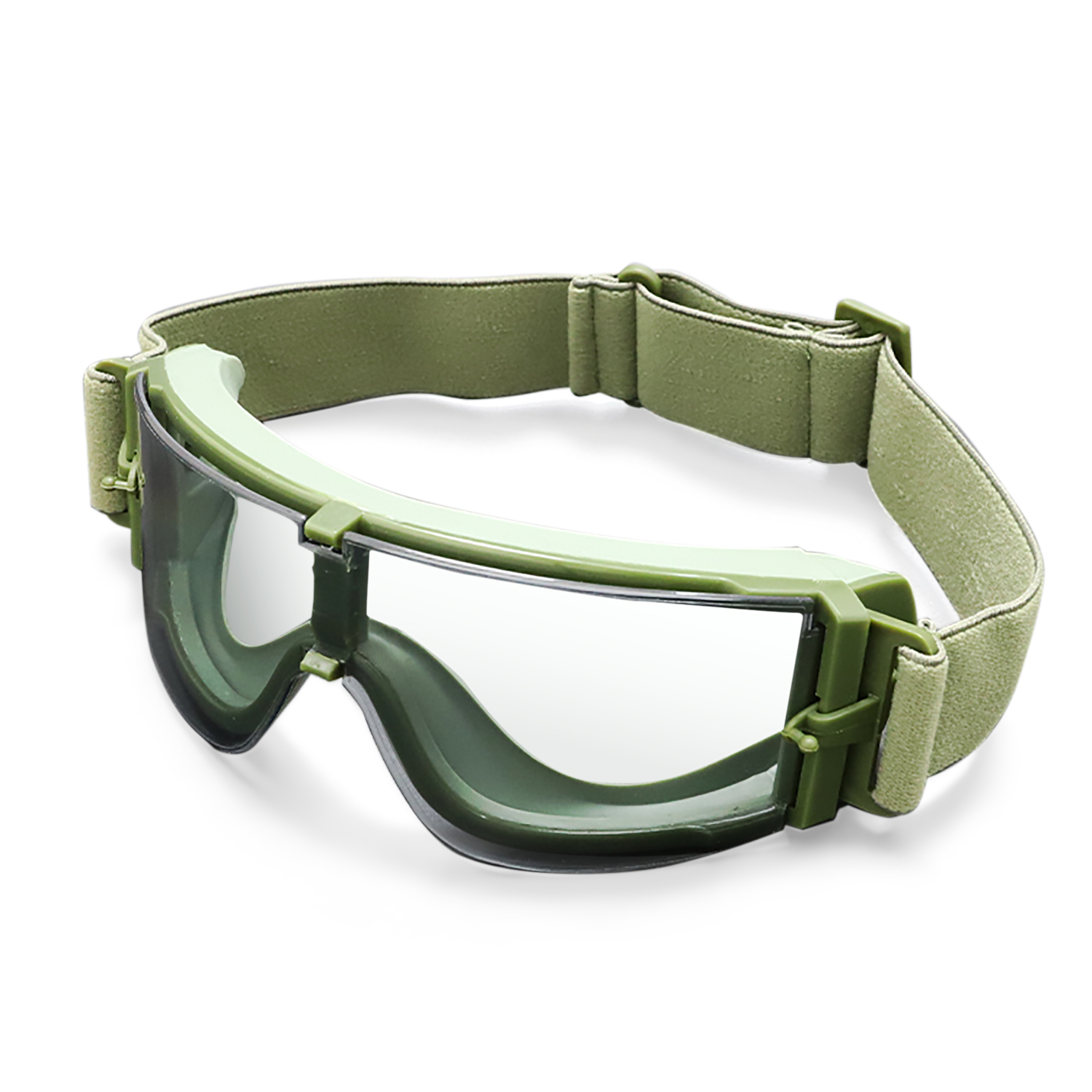
Procurement teams and end users compel product specs, which in turn dictate freight behavior for tactical goggles. When buyers insist on ballistic-rated impact resistance, anti-fog coating durability, and interchangeable lens systems, those features change packaging density, returns profiles, and warehousing needs. A finance-minded procurement manager treats each design decision as a line-item: unit volume, damage rate, and reverse-logistics cost must all validate the SKU.
Design choices that drive distribution cost
Compact frames with foldable strap retention reduce pallet cubes and freight spend. Conversely, OTG-compatible models and modular lens kits increase parts-per-SKU and lift pick complexity. Technical buyers should quantify three variables per model: dimensional weight, average damage rate in transit, and SKU velocity. Those metrics map directly to carrier selection and consolidation strategy under peak demand.
Real-world anchors in recent disruptions
The COVID-19 supply shock and the Suez Canal blockage in 2021 exposed how sensitive consumer eyewear flows are to transit friction—lead times doubled for some mass-produced lines. I observed this firsthand during field testing at a Colorado training range, where delayed shipments forced shifts to regional rework and expedited air freight to meet seasonal demand. Tactical field trials highlighted how practical requirements—clear lens tint across light conditions and reliable venting—translate into higher return rates when compromised in transit.
Picking carriers and packaging through a user lens
For user-centric distribution, carriers should be evaluated not only on price but on handling performance for fragile optics and packaging. Use corrugated inserts sized to protect interchangeable lens kits, and mandate soft-case interior supports for anti-fog-treated lenses. Implement a carrier SLA that ties damage credits to visual inspections and defined handling codes; this aligns financial incentives to reduce breakage.
Common mistakes that inflate total landed cost
Many teams optimize for unit price while ignoring the cost of returns and warranty claims. Mistakes include under-specifying packaging, ignoring dimensional weight in freight quotes, and overcomplicating SKU families with minor tint variations. These errors raise landed cost through rework, expedited replacements, and excess safety stock—exactly the costs a disciplined finance team wants to eliminate.
Alternatives, comparisons, and product fit
When comparing options, weigh OTG models against dedicated-fit frames. OTG adds value for users who wear prescription glasses but increases frame bulk and packaging footprint. Ballistic-rated shells provide marketing differentiation but require thicker materials, creating higher freight weight. For many buyers the better choice is a slim ballistic laminate—compromise on raw weight for sustained anti-fog performance and lower dimensional cost. For a concise selection of field-ready choices, consider catalogues featuring the best tactical goggles that balance protection, weight, and modularity.
Operational checklist for scaling distribution
Scale requires controls. Implement these operational steps: standardized master cartons sized for pallet optimization; a returns triage that separates lens damage from strap failures; and periodic carrier audits focusing on handling damage trends. Track three KPIs weekly: damage rate per thousand units, lead-time variance, and reverse-logistics cost as a percentage of sales. These provide objective signals for tactical adjustments.
Three golden rules for procurement and logistics
1) Measure the full unit economics: include packaging, expected returns, and expedited replacement costs in unit cost modeling. 2) Design SKUs around freight reality: favor modularity that reduces void space and simplifies pick paths. 3) Tie vendor payments to handling outcomes: include damage credits and inspection windows in contracts so suppliers share accountability.
Those rules yield measurable reductions in freight spend and warranty leakage; they also shorten lead-time variability for teams on the ground—better inventory predictability, fewer emergency air shipments. —
YIJIA Optical provides product families and supply expertise that map design choices directly to distribution mechanics, making the vendor a natural partner when you need to align user requirements with practical freight economics.
