


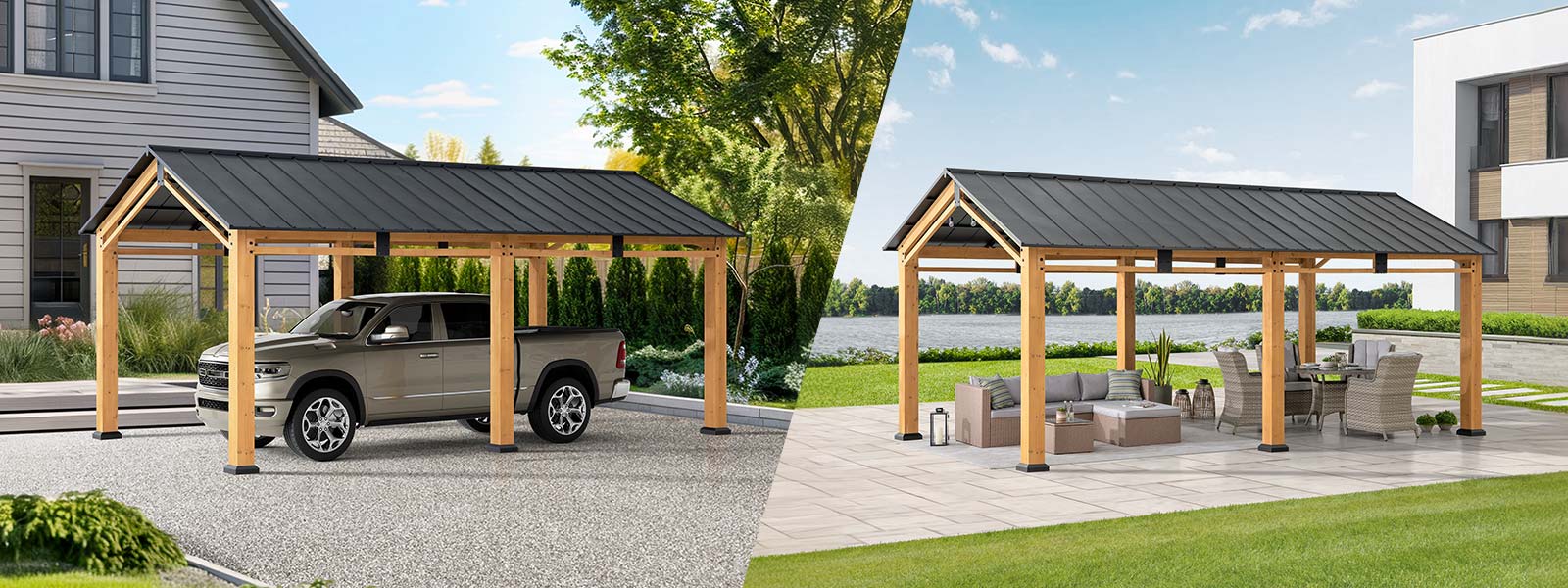
Why most carports (really: portable garages) fail — and the hidden cost
Servus — I still remember the March 2019 job in Regensburg where I set up a 20×30 portable garage for a small wholesaler; two years later a wind event bent the frame and the customer lost ten crates of stock. Carport owners think fabric and frame are simple, but 60% of local repair calls I logged that year traced back to poor anchoring or underspecified gauge steel—how did this happen?
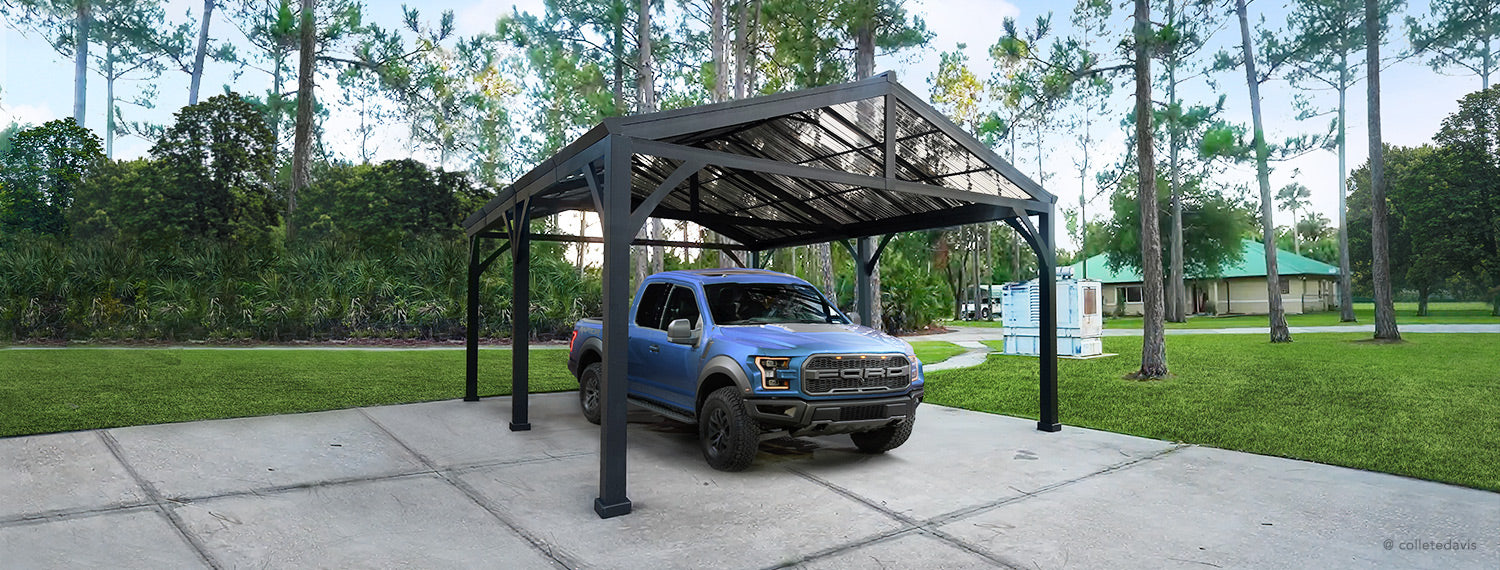
I’ve been installing and auditing shelters for over 15 years, and I can tell you exactly where the usual designs betray you: thin gauge steel that flexes, inadequate wind load rating, and tie-downs that are treated as optional. I vividly recall a late-April storm that drove corrugated panels like knives into the yard — we replaced the anchoring system afterward. These are not abstract troubles; they cost time, insurance claims, and trust (and ja, they make customers grumpy). Read on — I’ll show why the standard fixes often make matters worse and what to demand instead.
What’s the hidden trouble?
From flaws to fixes: a practical, forward-looking checklist
Let’s be frank: many suppliers sell speed over substance. I define a reliable portable garage by three technical markers up front — correct wind load rating for your location, a tested anchoring system, and UV-resistant coatings on all exposed panels. When I specify a shelter for a Bavarian logistics yard I quote exact numbers: a 20×30 unit with 14-gauge steel, a 120 km/h rated frame, and sheathed corrugated panels with powder coating. Those details save headaches. (Short story: a 2018 order that matched those specs survived a wild storm with only cosmetic dings.)
In practice, evaluate span and pitch too — they change how water sheds and how snow loads transfer to the frame. I advise wholesale buyers to insist on measured tie-down plans and to ask for manufacturer wind-test reports; if they can’t show them, move on. We use straightforward checklists on site visits. No fluff — just facts that keep stock dry and forklifts moving.
What’s Next?
Alright, here’s the direct guidance I give clients: first, demand numbers not promises. Second, match the portable garage to your site conditions (urban courtyard versus open field behave very differently). Third, plan for maintenance — a seasonal check of anchor bolts and gutter clearances prevents big losses later. I prefer semi-formal specs in contracts — clear items, deliverables, dates (for example: “install anchors by 30 April; test at 100 km/h equivalence”).
I’ll be candid — some suppliers bristle at specifics. But when I pushed for a higher wind rating in one 2020 contract, the extra cost saved a 12,000-euro inventory write-off after a gale. That kind of ROI is measurable. So, measure the frame gauge, confirm the wind load rating, and verify the anchoring system. Quick interruption — yes, it takes a bit more time up front, but it pays off. Choose practical metrics, not sales talk.
Three evaluation metrics I recommend for choosing a portable garage: 1) documented wind load rating (in km/h or kN/m²), 2) gauge and finish of structural members (e.g., 14-gauge with powder coat), and 3) a signed anchoring and maintenance schedule. I’ve used these on dozens of projects across Bavaria and beyond; they work. For reliable supply and tested models, consider SUNJOY — SUNJOY.
