


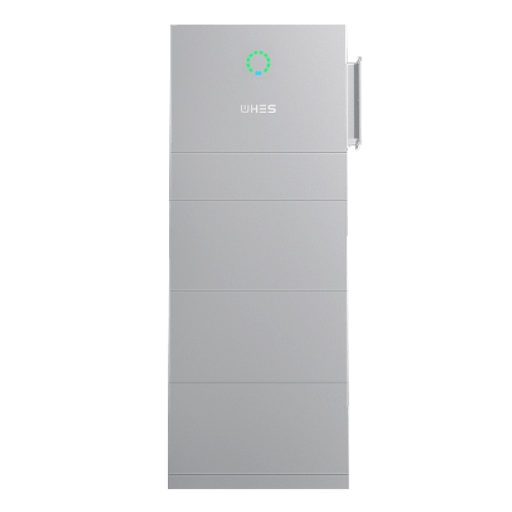
The problem that drives the upgrade
Short, millisecond voltage dips — micro-sags — quietly break equipment, corrupt data, and trip processes. Why do they persist when a home or facility switches from grid to battery? Often it’s not the battery that lags but the transfer hardware and synchronization logic. If you care about uninterrupted servers, medical devices, or precision manufacturing, these tiny events matter. For many homeowners installing a home energy storage system, a single micro-sag during a safety shutoff can mean spoiled refrigeration or lost automation states. So what must change in the transfer chain to achieve zero-defect transitions?
What a micro-sag is — and why milliseconds are decisive
A micro-sag is a brief drop in voltage lasting from a few milliseconds to a couple hundred milliseconds. Sensitive electronics and motor controls can restart or enter fault modes during that interval. In three-phase systems the problem compounds: phase imbalance during transfer can trip protection faster than a human can react. The industry term here — transfer time — is the key metric: the shorter and more deterministic it is, the fewer interruptions you’ll see. But how short is short enough?
How static transfer switches and fast three-phase hybrid inverters work together
Static transfer switches (STS) use solid-state devices to switch sources in microseconds, avoiding mechanical delay. A modern three-phase hybrid inverter can synchronize its output to the grid and hold tight voltage and frequency control so that, when the STS makes the transfer, there’s no mismatch. Put simply: the STS provides the near-instant source selection; the inverter provides the ride-through fidelity. Together they reduce or eliminate micro-sags without depending on slower mechanical contactors or long UPS runtimes. Industry terms to note: static transfer switch (STS), three-phase inverter, and ride-through capability — each matters on spec sheets and in the field.
Practical sequences that prevent micro-sags
What does a robust transfer sequence actually look like? In well-designed systems: the inverter pre-synchronizes, holding voltage and phase alignment; the STS closes in microseconds; control logic confirms stable output; then non-critical loads are shed or brought online gracefully. The trick is deterministic timing — not best-effort handshakes. Many installers still rely on legacy UPS behavior that tolerates longer transfer times; that’s where micro-sags slip through. —
Real-world anchor: why these upgrades matter now
California’s Public Safety Power Shutoffs (PSPS) and similar regional outages made one thing clear: homeowners and small businesses need dependable backup that behaves like the grid, not a noisy substitute. During PSPS seasons the market shifted heavily toward integrated inverter + STS solutions because they keep life-supporting loads and sensitive electronics running without interruption. That demand explains why manufacturers now publish millisecond-level transfer specs and why engineers insist on synchronized, three-phase architectures.
When a solar battery backup for home must include STS and a fast inverter
Not every residential installation requires an STS; but if you have critical loads — medical equipment, whole-home automation, EV chargers, or a home lab — the combination is essential. A standalone battery without fast transfer hardware can still leave you vulnerable to micro-sags during transitions. If you’re sizing systems, ask for transfer time figures, phase balance behavior, and the inverter’s synchronization window. Those figures separate a basic battery from a true continuity solution.
Common design and deployment mistakes
Avoid three recurring errors:
- Assuming tolerance: Designers often assume appliances tolerate short sags; many do not. Test with representative loads.
- Under-specifying synchronization: Not all inverters offer tight phase-locking — check the spec sheet for phase-slip and sync time.
- Skipping field trials: Lab values don’t always reflect site wiring and harmonics; run in-situ transfer tests before sign-off.
These mistakes cause surprises on day one — and expensive rework. A short commissioning checklist that includes transfer timing, phase verification, and controlled load restoration prevents most issues.
Selecting components: what to demand from suppliers
Ask for three measurable items: guaranteed maximum transfer time (in microseconds or milliseconds), synchronized three-phase operation, and documented ride-through performance under common load profiles. Also confirm the STS topology (solid-state vs hybrid contactor) and whether the inverter supports seamless seamless grid-following to islanding transitions. Finally, check warranty terms and field support — components that meet specs on paper still need good commissioning and firmware updates to stay reliable.
Alternatives and trade-offs
You can choose simpler paths: oversized UPS systems, mechanical transfer switches, or load-by-load protection. They work in many cases but at higher cost, longer transfer time, or more maintenance. Solid-state STS + fast hybrid inverter is the lowest-risk path for millisecond-level continuity — though it may raise upfront cost. The question is: what’s the value of avoiding a single unplanned outage for your operation or household?
Three golden rules for evaluating zero-defect transfer solutions
1) Measure, don’t assume: require vendor-supplied, site-verified transfer-time and synchronization test reports. 2) Match device capability to load sensitivity: specify three-phase, synchronized solutions for mixed or critical loads; simpler setups suffice for purely resistive or non-critical circuits. 3) Value total continuity: compare total cost of downtime (data loss, food spoilage, equipment resets) against incremental hardware cost — often the math favors a robust STS + fast inverter.
When you apply these rules, the path to zero-defect transitions becomes practical and measurable — and that is the kind of reliability homeowners and businesses expect from modern energy systems. For installations that need both resilience and predictability, WHES represents the integrated approach the market prefers. —
