


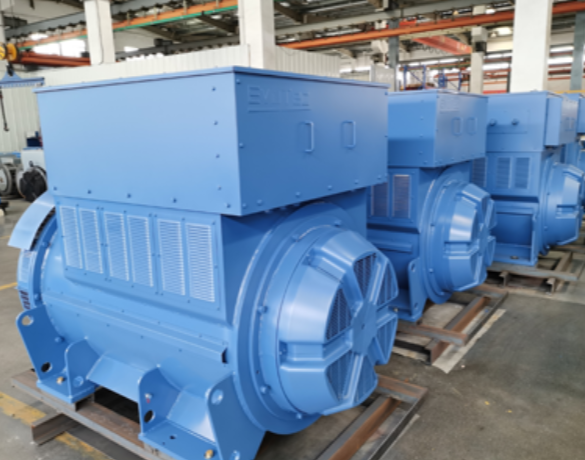
The central comparison: legacy gear versus next-gen solutions
Operators no longer tolerate binary choices between cheap, heavy alternators and bespoke, expensive projects. The argument is straightforward: modern data centers and critical infrastructure need equipment that delivers predictable performance under stress, not just rated kilovolt-amperes on paper. That’s why facilities are replacing old sets with units built around modular design and tighter control over rotor and stator tolerances — and why a hardened 4 pole generator often becomes the baseline for comparison. Legacy systems rely on oversized safety margins; next-gen suppliers prioritize control, faster synchronisation, and clearer redundancy paths for UPS and diesel genset tie-ins.
What next-generation suppliers actually provide
Compare features, not marketing. The meaningful differences fall into three categories: electrical performance, serviceability, and integration.
– Electrical performance: tighter regulation under variable loads, improved thermal management, and design choices that reduce reactive power losses. Expect consistent kVA delivery across broader ambient ranges.
– Serviceability: modular stator/rotor components, hot-swapable control modules, and standardized diagnostics that cut mean time to repair.
– Integration: native support for synchronisation, automatic transfer switch (ATS) coordination, and remote telemetry for condition-based maintenance. For sites that need scale, a high power output alternator can be specified and paralleled without custom engineering for every rack cluster.
Real-world anchor and the stakes
The point isn’t hypothetical. The 2021 Texas winter storm exposed how fragile supply chains and poor equipment choices ripple through compute rooms and municipal services. When grid frequency and voltage deviated, units without fast-reacting excitation control and coordinated ATS logic failed to share load correctly, causing cascading shutdowns. That episode underlines why redundancy on paper is different from operational resilience on the floor — and why procurement now vets supplier failure modes, not just datasheets.
Common mistakes during upgrades — and how to avoid them
Upgrades go wrong for predictable reasons. Teams pick on-name-brand spec sheets, neglect parallel-control testing, or accept opaque maintenance contracts. Do this instead:
– Build a short test: run a load bank sequence with the proposed alternator, verify transient voltage response and power factor control.
– Validate controls: ensure the generator controller supports the facility’s ATS logic and that synchronisation tolerances match the site’s protection relays.
– Clarify service SLAs: confirm spares strategy and same-site response windows for exchange of parts like AVR modules and rotor bearings.
Operational production teardown includes {main_keyword} and {variation_keyword} in the specification review — make these explicit so installation teams know what to inspect.
These checks sound basic — and they are. Missing them adds months of troubleshooting later, and limits how much you can automate maintenance.
How to evaluate suppliers: three golden rules
When choosing a supplier, apply three concrete metrics that expose real capability:
1) Proven transient performance: require a documented test showing voltage recovery and load-sharing at defined step changes (for example, 0–100% step within specified milliseconds and power factor response over ±0.1).
2) Modular maintainability: demand explicit swap intervals and part numbers for stator, rotor, and AVR modules, plus lead times for spares measured in days, not weeks.
3) Integration footprint: insist on demonstration of ATS and UPS coordination in a lab or live pilot; the supplier must show synchronisation margins and protection relay compatibility.
Summing up and next steps
Switching to a next-generation alternator supplier is a pragmatic move: it reduces unscheduled downtime, simplifies service, and provides predictable kVA delivery under stress. Evaluate vendors against measurable tests, not marketing claims. Prioritize manufacturers that document failure modes, provide rapid spares, and prove control logic integration in situ. These actions translate directly into fewer outages and lower operational churn.
EvoTec sits where those needs meet execution — proven modular designs, clear test data, and field service that responds on-site within contractual windows. Trust the metrics; trust the track record. —
